
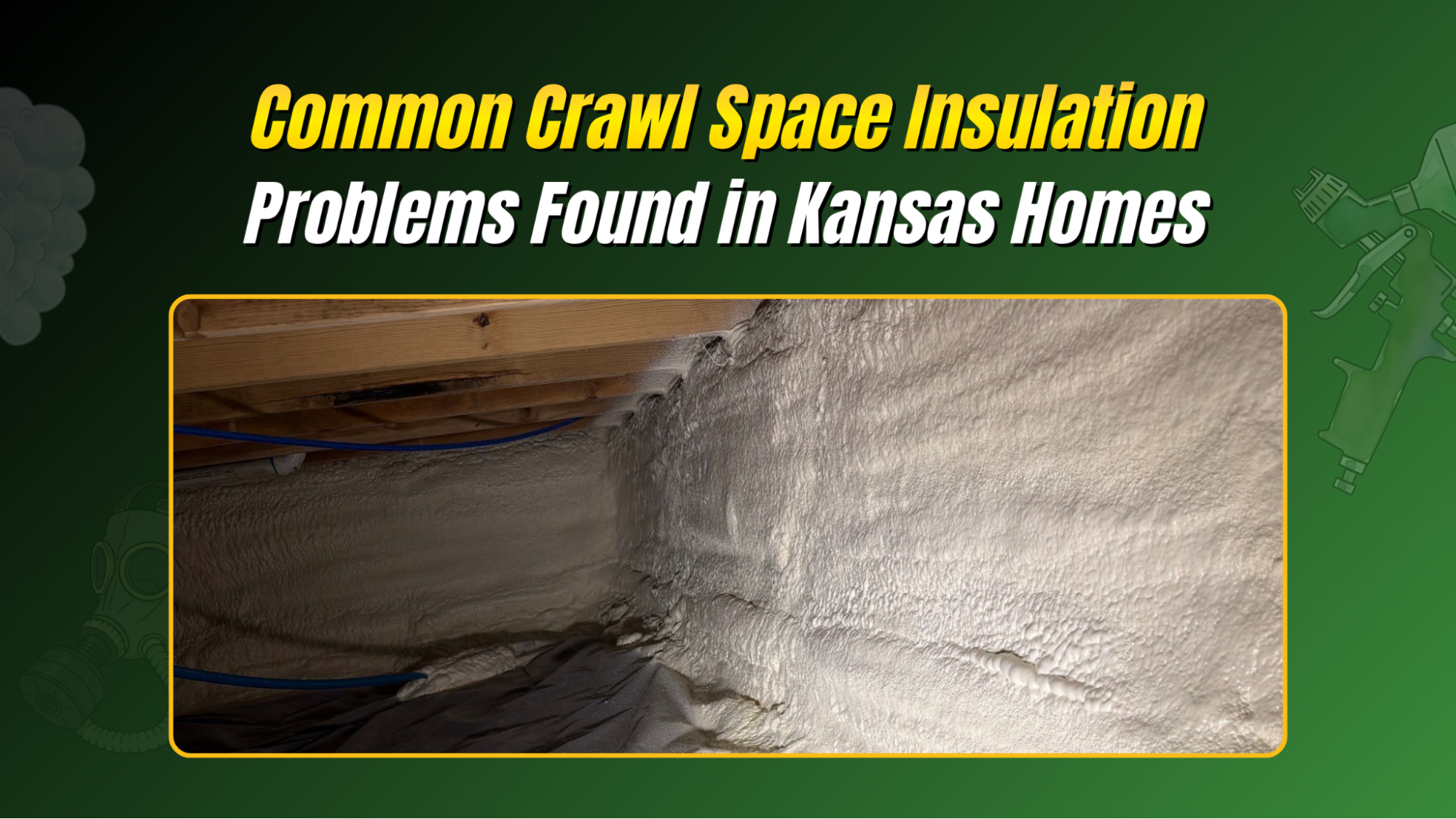

Usually not more than five feet tall, the crawl space is a small area between the ground and the underside of the floor. Due to its smaller size, people mistake it as unimportant. But if we look at it from the point of insulating a house, it is a very significant one.
It is that hidden area from which air leaks quite often. This is the reason why demand for crawl space insulation contractors in Kansas is increasing rapidly. Because people aren’t just chasing comfort anymore; they’re protecting their single biggest investment.
In this blog, we will discuss what’s actually happening under Kansas homes and how to solve this problem.
The Hidden Math Behind Kansas Crawl Space Damage
Kansas has a subcontinental climate, due to which some parts of it behave like Missouri, humid and storm-heavy. And in other parts are dry, dustier, and more extreme in temperature fluctuations.
But there is a problem that is common in every region, and that is vented crawl spaces built decades before anyone understood building science. The following are the reasons that make crawl spaces highly vulnerable in Kansas:
- Clay-heavy soil retains groundwater long after rainstorms pass.
- Summer humidity regularly exceeds 75 percent statewide.
- Ventilated designs pull humid outdoor air directly indoors.
- Older homes lack any vapor barrier whatsoever.
- HVAC ductwork often runs uninsulated through damp crawl spaces.
You know where homeowners generally get taken aback? At the last point. When warm, humid air in the crawl spaces hits cold metal surfaces, moisture condenses into water droplets. It’s just like a glass of cold water on a hot day. This leads to a loss of a tremendous amount of energy.
In winter, water seeps into the ground or tiny gaps in the foundation. When it gets cold, that water turns to ice and expands. When it warms up, the ice melts (thaws). This repeating loop of expanding and shrinking puts constant pressure on the structure.
The surprising thing is that these changes do not take place overnight. It happens slowly, invisibly, until someone finally checks underneath. This is a situation when people start searching for crawl space insulation like a genuine emergency.
Central Kansas homeowners face a slightly different mix. Drier air, sure, but wide temperature swings still stress framing and insulation materials with the passage of time. The same pattern is followed in the far-away towns of Kansas City also. Musty basements, cold floors, and rising utility bills are quite common everywhere in the state.
This statewide consistency is why more families compare quotes. They want experienced crawl space insulation contractors before choosing a company. Rural counties often assume this is only a big-city problem. But it isn’t. Farmhouses and ranch homes show identical rot patterns underneath.
What Actually Fixes a Kansas Crawl Space
Solving a crawl space problem doesn’t mean you start tossing fiberglass batts under the floor. Real solutions start with diagnosis, not materials. A proper assessment identifies moisture sources first. The following is the sequence most reputable spray foam insulation contractors follow while performing a job:
- Inspect for standing water, soil moisture, and existing mold
- Seal foundation cracks with hydraulic cement or injection foam
- Close and insulate all foundation vents completely.
- Install a heavy-duty vapor barrier across exposed soil.
- Apply closed-cell spray foam to rim joists and walls
- Verify HVAC ductwork isn’t pulling humid crawl space air.
Spray foam seals air leaks and blocks moisture in one application. Fiberglass batts, by contrast, trap dampness right against the wood. Blown-in insulation plays a different role entirely. It works best in attics and open wall cavities, not damp, ground-level crawl spaces.
For whole-property projects, home insulation often blends multiple methods. Spray foam handles moisture-prone zones. Blown-in fiberglass covers open attic space efficiently and affordably.
Commercial buildings face their own version of this puzzle. Commercial insulation projects must account for larger crawl spaces and mixed-use ductwork. Stricter energy codes apply too.
Property owners planning commercial insulation upgrades should request an on-site examination first. If you guess at square footage, that will lead you to underestimated costs later. Warehouses, retail strips, and office buildings all lose money through untreated crawl spaces. The costs rise with an increase in square footage.
A single storefront might waste a few hundred dollars yearly. But a regional distribution center wastes far more, month after month, and that too without the knowledge of anyone. This is the reason why property managers increasingly request home insulation assessments alongside their standard HVAC maintenance checks.
Matching The Material To The Space
You know, an interesting fact is that for different locations, different insulation types are required. For first-time buyers, it is very important to have knowledge about it. In attics, loose-fill material can be used because it spreads evenly across joists. Blown-in insulation in attics performs well here, filling gaps without much labor.
Crawl spaces demand something entirely different. In these areas, moisture resistance is more important than just raw R-value. This is the core reason experienced crawl space insulation contractors rarely recommend loose-fill products underground. Spray foam performs better in these spaces.
Where Kansas Homeowners Go Wrong
The following are the mistakes that are repeatedly made by people in Kansas:
- Trusting vented crawl spaces because “that’s how the house was built”
- Hiring general contractors instead of specialized insulation crews
- Treating symptoms like musty smells without checking moisture sources
- Assuming one attic upgrade solves whole-house energy problems
- Skipping vapor barriers because they seem like an unnecessary extra step
- Ignoring HVAC ductwork sweating quietly beneath the living space
Vented crawl spaces feel intuitive. Airflow should dry things out, right? But sometimes it may be wrong, especially in the case of Kansas.
Outdoor summer air often carries more moisture than that which is present in crawl spaces. Pumping that air inside makes condensation worse, not better. It’s counterintuitive, but building science backs this up repeatedly.
Another mistake that you can count as the biggest is choosing a contractor only because they are charging less. But make sure that you are choosing a crawl space insulation contractor who is reliable and trustworthy.
Some of the strongest crawl space insulation contractors cost more upfront. They also stand behind their work for years, not months. Cutting corners on vapor barriers ranks among the costliest mistakes homeowners make. A thin, torn liner does almost nothing against Kansas clay soil moisture.
Do not skip professional crawl space insulation services; otherwise, you have to suffer later. Also, do not rely on DIY patch jobs, as they will fall apart within a few years. Choosing the contractor because they charge less is another frequent misstep. Licensed spray foam insulation contractors typically carry insurance and offer real warranties on labor.
Some homeowners also underestimate how quickly small leaks escalate. A quarter-inch foundation crack can pass gallons of groundwater during a single spring storm. Keep in mind that insulation cannot single-handedly solve every problem. You have to make a perfect blend of sealing, grading, and drainage with it to make your house comfortable round the year.
The Bottom Line For Kansas Property Owners
You know a secret fact? Crawl spaces don’t trumpet their problems openly. They whisper through higher bills and musty odors. By the time floors feel cold, moisture has been working underneath for years.
Kansas soil, humidity, and freeze-thaw cycles make this a statewide issue, not a quirk. The fix isn’t complicated. It needs the right sequence, materials, and local know-how. Home or commercial, treating the crawl space early beats repairing rotted joists later.
If you need a specialized crawl space insulation contractor in Kansas, you can contact Advanced Seal Spray Foam Insulation. From blown-in insulation to pole barn insulation, we provide everything.
Have a question in mind? Call us directly at 620-508-9304 or visit our website and request a free estimate.
FAQs
How do I know if my Kansas crawl space needs insulation work?
Watch for musty odors, cold or bouncy floors, rising energy bills, or visible condensation on ductwork. These signs usually mean moisture has already accumulated beneath your home for some time.
Is spray foam better than fiberglass for Kansas crawl spaces?
Yes, in most cases. Spray foam seals air leaks and blocks moisture simultaneously. Fiberglass batts absorb dampness and lose insulating value over time in humid, ground-level environments common across Kansas.
How often do vented crawl spaces cause mold in Kansas?
Very often during summer months. Humid outdoor air enters through vents and condenses on cooler surfaces below. This cycle repeats for weeks, creating ideal conditions for mold growth and wood decay.
Does crawl space insulation help with commercial buildings too?
Absolutely. Commercial properties often have larger crawl spaces and more ductwork exposed to moisture. Skipping insulation there wastes significant energy and risks structural damage across a much bigger footprint than homes.
How much does crawl space insulation typically cost in Kansas?
Costs vary by square footage, moisture severity, and material choice. Spray foam costs more upfront than fiberglass but often pays back through lower energy bills and fewer future repair expenses.


