
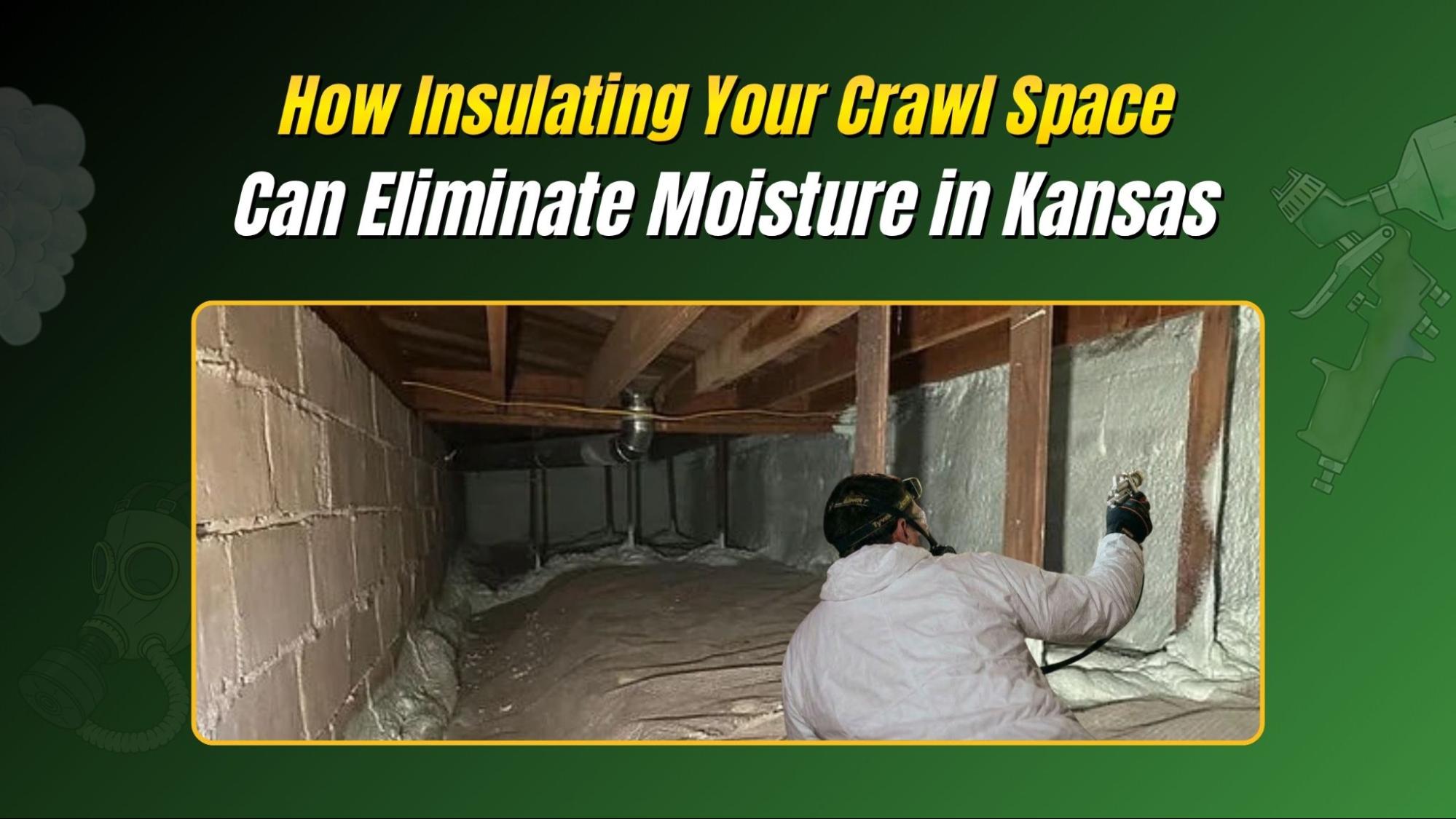

Has moisture been creeping into your crawl space and causing real headaches at home? We hear this from homeowners all across Central Kansas, week after week. The good news is that proper crawl space insulation does prevent moisture, and it works really well when you follow the right steps.
Frozen pipes, mold growth, and structural damage all connect back to one root cause: a damp crawl space. These problems are common in Kansas homes, but they’re also very preventable. Moisture damage hurts your foundation and pushes your energy bills higher every season.
We’re going to walk you through the exact process we use, from sealing groundwater leaks to laying down a vapor barrier. By the end, you’ll know what needs to happen and why each step matters.
Steps to Properly Insulate a Crawl Space and Eliminate Moisture
Proper crawl space insulation in Central Kansas means tackling water problems first, then adding the right protective materials. We’ll walk you through each step so you get it right. The foundation of your home depends on it.
Fix Groundwater Leaks and Seal Vents
Groundwater leaks and open vents are the main culprits behind moisture problems in Central Kansas crawl spaces. We’ve seen countless homes suffer from mold, rotting wood, and energy waste because these two issues went unaddressed.
According to 2026 foundation moisture data from regional waterproofing experts, over 60% of crawl space moisture problems stem from poor exterior grading and drainage, a challenge made worse by the expansive clay soils found throughout much of Kansas. That makes fixing your exterior drainage one of the most impactful things you can do first. Start by addressing how water reaches your crawl space from outside:
- Identify active water intrusion by looking for standing water, wet soil, or water stains on foundation walls during one of our free inspections.
- Grade the soil away from your home’s perimeter so rainwater flows outward rather than pooling near the foundation.
- Add gutters and downspouts if missing, extending them at least four to six feet away from your foundation.
- Install interior or exterior drain tile systems to capture groundwater before it reaches your crawl space floor.
- Install a sump pump system to collect and redirect groundwater away from your crawl space foundation.
With exterior drainage handled, move on to sealing and verifying from the inside:
- Seal all foundation cracks with hydraulic cement or polyurethane injection to stop water from entering through the walls.
- Close all vents with foam board, rigid insulation, or spray foam to prevent outside air and moisture from entering.
- Verify that your HVAC system doesn’t pull air from the crawl space, which can draw in humid outdoor air.
- Seal rim joists where they meet the foundation wall using spray foam insulation services to eliminate air gaps.
- Test moisture levels after sealing to confirm that groundwater leaks and vent openings no longer allow dampness inside.
We’ve worked on hundreds of crawl spaces across Central Kansas, and addressing leaks and sealing vents first always reduces moisture levels. It prevents mold growth, frozen pipes, and structural damage down the road.
Insulate Crawl Space Walls with Water-Resistant Materials
Your crawl space walls are the first line of defense against Kansas moisture. We’ve seen countless homes transform once we get the right materials in place. Proper insulation for crawl space walls stops water damage before it starts, protecting your entire home from costly repairs. Two main material options work best for Central Kansas conditions:
- Rigid foam board resists moisture and holds its R-value over time, even with Kansas’s wide temperature swings.
- Closed-cell spray foam creates an airtight seal on crawl space walls, preventing moisture from sneaking through cracks and gaps that rigid boards might miss.
- Vapor barriers work alongside wall insulation to create a complete moisture management system.
- Fiberglass batts aid in moisture reduction when paired correctly with other moisture control materials.
Material costs for crawl space insulation range from $0.30 to $6.75 per square foot, depending on the material and your specific crawl space size. According to a 2026 regional pricing analysis, the average complete crawl space encapsulation and insulation project in Kansas costs around $4,700, with a typical range of $3,055 to $6,815 depending on the space’s size and any structural repairs needed.
That context helps you set a realistic budget before any work begins. Here’s how we handle the actual installation:
- We apply water-resistant insulation directly to foundation walls, stopping cold air and humid conditions from reaching your living spaces above.
- We secure rigid foam board to walls with mechanical fasteners, ensuring it stays in place and maintains consistent protection year-round.
- Closed-cell spray foam bonds directly to concrete and block walls, eliminating air pockets where moisture could hide.
- Mold growth stops when these materials are installed correctly, because moisture can’t settle on the insulation surface or surrounding wood.
- Frozen pipes become a non-issue once water-resistant insulation protects your crawl space walls during Central Kansas winters.
Our team has installed both rigid foam and closed-cell spray foam on hundreds of crawl spaces, and we know which material fits each situation best. These wall insulation methods form the backbone of your crawl space encapsulation strategy, and the benefits extend well beyond moisture control.
Install a Vapor Barrier on the Dirt Floor
With your crawl space walls protected, the next step is the dirt floor itself. Installing a vapor barrier here is critical. It stops moisture from rising through the soil and into your home. Here’s how the installation process works:
- We lay down a heavy-duty polyethylene sheet across the entire dirt floor, overlapping seams by at least 6 inches to prevent gaps where moisture can sneak through.
- Our team secures the vapor barrier to the crawl space walls, extending it several inches up the foundation to create a continuous moisture shield.
- We seal all seams and penetrations with compatible tape or sealant, eliminating pathways for ground moisture to bypass the barrier.
- We recommend a vapor barrier thickness of at least 6 mils for residential applications, though commercial building owners often benefit from thicker options.
- We install the vapor barrier before adding any spray foam insulation to the project, making sure the moisture control foundation is solid first.
The results go well beyond keeping the crawl space dry. According to 2026 environmental health insights, up to 50% of the air on the first floor of a home originates directly from the crawl space. That means a properly sealed crawl space directly improves the air your family breathes upstairs, not just the structure below your feet.
Proper vapor barrier placement also improves home comfort and temperature consistency throughout your living spaces. The barrier prevents mold growth and frozen pipes, two problems that hit Kansas homes hard during both harsh winters and humid summers.
From our jobsite experience across Central Kansas, we’ve watched vapor barriers transform damp, uncomfortable crawl spaces into dry, stable environments that protect the entire home above. Advanced Seal Spray Foam Insulation provides vapor barrier installation as part of our comprehensive crawl space insulation approach.
Benefits of Crawl Space Insulation for Kansas Homes
Crawl space insulation delivers results that directly impact your home’s performance and your wallet. We’ve watched moisture problems disappear, and energy bills drop when homeowners take this step seriously.
Moisture Reduction and Mold Prevention
Moisture loves to settle in crawl spaces, and that’s where mold thrives. We’ve seen it countless times on jobsites across Central Kansas: homeowners discover dark patches spreading across their foundation, and the musty smell tells the whole story. Proper crawl space insulation controls moisture levels and prevents mold growth before it becomes a costly problem.
Our team at Advanced Seal Spray Foam Insulation specializes in moisture and temperature control, using techniques like closed-cell spray foam to lock out water vapor at the source. This approach stops water vapor from creeping into your home, which means your family breathes cleaner air and your property stays protected. Encapsulation with a vapor barrier is recommended for effective moisture management.
Mold spores spread fast in humid environments, but proper insulation eliminates moisture at the source. From our real jobsite experience in Central Kansas, homeowners and property managers face serious consequences when moisture goes unchecked. Frozen pipes during cold weather become less likely, and structural rot slows dramatically. Your property holds its value. This isn’t just about comfort. It’s about protecting your investment for decades to come.
Improved Energy Efficiency and Comfort
Controlling moisture does more than stop mold. It opens the door to real energy savings, and we see this play out on job sites across Central Kansas all the time. When we insulate crawl space walls with water-resistant materials and install a vapor barrier on the dirt floor, we stop cold air from sneaking up through your home.
Drafts disappear. Your heating system stops working overtime. Closed-cell spray foam, rigid foam board, and fiberglass batts all deliver strong R-values that keep temperatures consistent throughout your house. Lower utility bills and a genuinely comfortable home, no matter the season.
According to estimates from the EPA’s ENERGY STAR program, air sealing a home and upgrading insulation can save homeowners an average of 15% on their total heating and cooling costs. That’s a meaningful return on your crawl space investment. The benefits show up in very practical ways:
- Crawl space insulation prevents frozen pipes during brutal winters.
- Summer heat stops radiating up through your floors.
- Rooms feel warmer in December and cooler in July, without cranking your thermostat.
- Property managers and commercial building owners see heating and cooling expenses drop noticeably after addressing their crawl spaces.
Homeowners and insulation contractors in Central Kansas hear the same question: Will this really make a difference? Based on what we’ve seen on job sites across the region, the answer is absolutely yes. Encapsulating crawl spaces with a vapor barrier improves moisture management while cutting your energy costs.
Your home becomes more livable. Your wallet stays fuller. That’s the comfort and efficiency combination we work toward on every insulating crawl space project for Kansas homes.
Conclusion
So, does crawl space insulation prevent moisture? Yes, and we’ve walked you through exactly how: fixing leaks, sealing vents, installing water-resistant materials, and laying down a vapor barrier. Your crawl space can go from a damp problem zone to a dry, protected space that keeps mold away and energy bills lower.
Advanced Seal Spray Foam Insulation serves Central Kansas homeowners, property managers, and commercial building owners with free inspections and estimates, so you can see exactly what your crawl space needs before spending a dime. Reach out today, and we’ll get your moisture problems solved for good.


