

For most Kansas garages, the best insulation system is the one that solves all three problems at once: extreme temperature swings, uncontrolled air leakage, and moisture-related issues. That is why garage spray foam insulation in Kansas is often the best choice. It seals gaps, slows heat transfer, helps control condensation, and turns a garage from a space that is miserable half the year into one that is usable every day.
At Advanced Seal Spray Foam Insulation, we insulate garages across Central Kansas and the Wichita metro, attached garages, detached garages, workshop garages, oversized garages, and garage additions. We work on new construction, existing garages with little or no insulation, and garages that were insulated poorly the first time and still feel hot, cold, drafty, or damp. Every project starts with a free on-site inspection. We look at the actual garage before recommending anything.
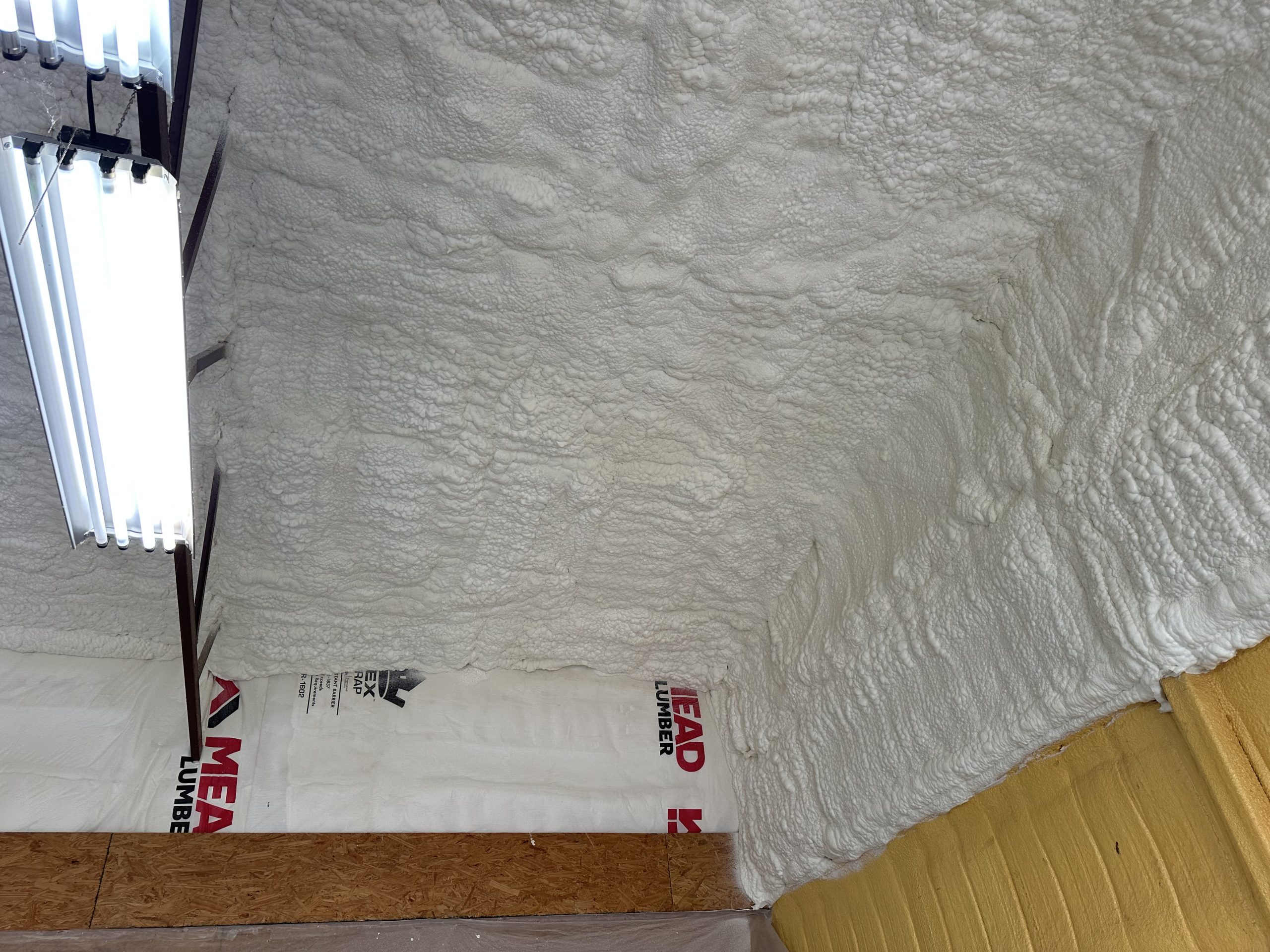
We work on a wide range of garage insulation projects across Central Kansas and the greater Wichita area.
Garage additions are another key category. When a new garage is being added to a home or property, it is the ideal time to install the right insulation before the space is closed in.

Different garages call for different solutions, but these are the three patterns we recommend most often.
For many Kansas garages, closed-cell spray foam is the strongest overall solution. Closed-cell foam delivers high R-value per inch, air-seals as it insulates, and adds moisture resistance that makes it especially useful in garages where comfort and durability both matter. Closed-cell foam is especially useful when the garage has one or more of the following conditions:
Open-cell foam has a role in garage projects, too, but usually in locations where vapor resistance is not the main priority and where sound reduction or budget efficiency matters more. In garages with framed cavities and no special moisture exposure concerns, open-cell foam can be a good fit in walls or roof assemblies. It does not provide the same vapor resistance or R-value per inch as closed-cell, so it is not our default answer everywhere. The assembly has to match the building.
Not every garage needs full spray foam from top to bottom. Some Kansas garage projects benefit from a hybrid approach. If the garage attic is vented and truly separated from the conditioned area below, blown-in insulation on the attic floor can be an efficient way to add R-value after proper air sealing. If the walls are the main weakness, but the attic is already handled, we may focus only on the wall and ceiling transitions. If the garage is attached and the room above is uncomfortable, the priority may be the ceiling/floor assembly rather than the full garage envelope.

We inspect before we quote. Garage insulation is too dependent on real-world conditions to price accurately over the phone.
For many Kansas garages, spray foam insulation is the best overall option because it insulates and air-seals at the same time. That matters in a garage, where leaks, temperature swings, and moisture movement are usually part of the problem. The best system still depends on the garage’s design, whether it is attached or detached, and how you use the space.
Yes, especially if your garage is uncomfortable, if you use it as more than a place to park, or if there is a room above it that never feels right. Spray foam is often worth it because it addresses both insulation and air leakage. In garages, that combination usually matters more than R-value alone.
It depends on the garage. In some garages, walls are the biggest problem. In others, the ceiling or roofline is where most of the heat gain or heat loss occurs. If there is a room above the garage, the ceiling assembly is often a priority. A free inspection is the best way to know which area will give you the biggest improvement.
Very often, yes. A poorly insulated garage ceiling can make a bedroom, office, or bonus room above it feel too cold in winter and too hot in summer. Improving the garage ceiling or roof assembly is one of the most effective ways to stabilize that room.
Yes, existing garage insulation upgrades are common. We work on garages with no insulation, garages with outdated fiberglass, and garages where only part of the assembly was done. Some projects are straightforward because the cavities are accessible. Others require a more targeted plan, depending on what is finished and what can still be reached.
If the garage has a vented attic and a well-defined ceiling plane, blown-in insulation can be a strong option after air sealing. If the roofline itself needs to be inside the envelope, spray foam at the roof deck may make more sense. The right answer depends on how the garage is built and used.
It can, especially for attached garages or garages that share walls, ceilings, or floors with conditioned living space. Better insulation reduces unwanted heat transfer and air leakage, which can reduce the burden on your HVAC system and improve comfort in nearby rooms.
Properly installed spray foam is considered a long-term insulation solution. Unlike older loose or sagging materials, it does not typically settle the way some traditional products can. When installed correctly and kept within a sound assembly, it can continue performing for decades.
If your garage is too hot in summer, too cold in winter, drafty, damp, or making the room above it uncomfortable, the next step is simple: let us look at it in person. A free inspection allows us to see how the garage is built, where the weak points are, and which insulation approach will actually improve the space. That means a more accurate quote and a better result.
Pratt and Central Kansas: 620-508-9304
Wichita and Sedgwick County: 316-202-9808
Email: Jason.sprayfoam@gmail.com
Online: Request your free estimate at advancedsealsprayfoam.com
Monday through Friday, 8:00 AM to 5:00 PM. We return all calls and messages promptly.
Jason Rinehart is the owner of Advanced Seal Spray Foam Insulation, based in Pratt, Kansas, with service in Central Kansas and the Wichita metro. Advanced Seal installs insulation for homes, garages, attics, crawl spaces, shops, metal buildings, and pole barns across the region.
