
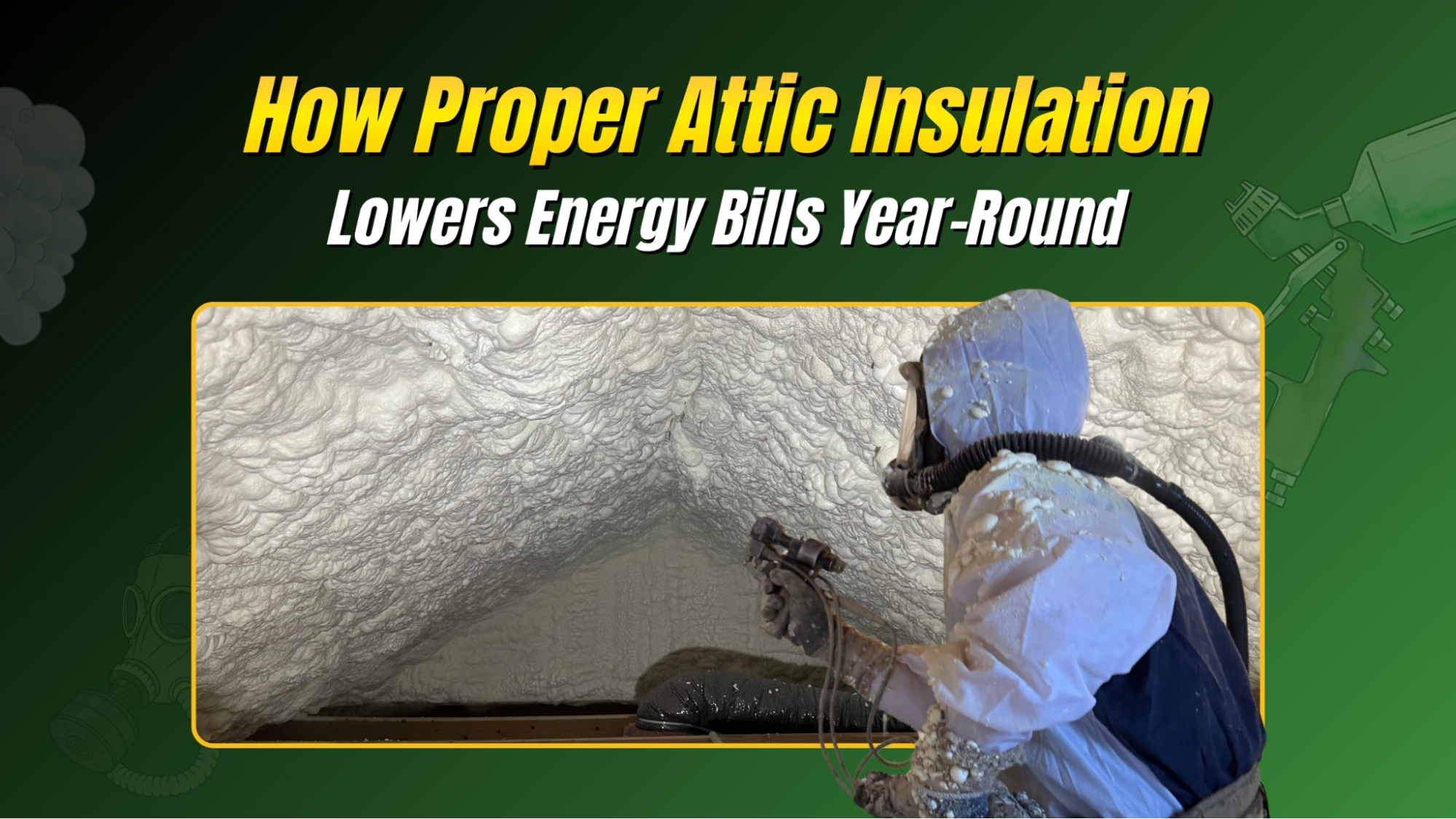

If your home feels like it can’t make up its mind, too hot in summer, too cold in winter, your attic is usually part of the story.
In most houses, the attic is the biggest “boundary” between your conditioned living space and the outdoors. When that boundary is thin, patchy, or leaky, your HVAC system works harder than it should. When it’s insulated and sealed correctly, the home holds temperature longer, rooms feel more even, and your monthly energy bills tend to calm down.
At Advanced Seal Spray Foam Insulation, we spend a lot of time in Central Kansas attics, and we see the same patterns over and over: insulation that’s settled, missing in key areas, installed without air sealing, or paired with moisture/ventilation issues that reduce performance. The good news is that most of these problems are fixable, and the payoff is the comfort you feel every day, in every season.
Why The Attic Matters More Than Most Homeowners Realize
Heat doesn’t “rise” because it wants to. It moves from warm to cold, and it moves in three main ways:
- Conduction: Heat traveling through materials (drywall, framing, roof deck)
- Convection: Heat moving with air currents
- Air leakage: Conditioned air escaping, and outdoor air sneaking in
Attic insulation helps slow conduction. But air leakage is often the bigger money leak, because when air moves, heat moves with it. That’s why air sealing + insulation together is where the real improvement happens.
ENERGY STAR specifically calls out attic air sealing as a high-impact place to stop major air leaks, and notes that combining air sealing with attic insulation improves comfort and efficiency.
The “Stack Effect”: The Year-Round Energy Bill Problem Hiding In Your Walls
Here’s a simple way to picture it:
- In winter, warm air inside your home tends to rise and escape through leaks into the attic. That pulls cold outdoor air in from lower areas of the house to replace it.
- In summer, hot attic air can push downward through gaps, and your cooled air can leak upward, forcing your AC to run longer to keep up.
This constant air exchange is one reason some homes feel drafty even with the windows closed. Proper attic insulation, installed with attention to air sealing, helps interrupt this cycle.
What “Proper Attic Insulation” Actually Means (It’s Not Just Adding More)
A lot of people assume attic insulation is a “more inches = better” situation. Sometimes it is. But proper insulation is really a checklist:
1) The attic floor is air sealed before insulation goes in (or before adding more)
Air sealing targets the gaps where air moves between your living space and attic, around plumbing penetrations, electrical boxes, top plates, attic hatches, and open chases.
The U.S. Department of Energy (DOE) and ENERGY STAR both emphasize that air sealing is a core part of good insulation performance.
2) The insulation level (R-value) matches your climate zone and attic design
R-value is resistance to heat flow. A higher R-value generally means better thermal performance.
ENERGY STAR publishes recommended insulation R-values by climate zone and location in the home. DOE also provides climate-zone guidance and tables for recommended insulation levels.
In plain English: you want enough insulation to slow heat transfer, but you also want it installed correctly so it performs like it’s supposed to.
3) Insulation coverage is consistent: no bare spots, low spots, or wind-washed areas
One uncovered area can behave like an open window compared to the rest of the insulated attic. This is common around:
- attic access openings
- recessed lights (older non-IC-rated fixtures)
- soffit edges where insulation has been pushed back
- mechanical platforms and storage areas
4) Moisture is managed
Insulation is not a moisture “fix.” If moisture is coming from the house into the attic (bath fans venting into the attic, leaky ducts, or air leakage carrying humidity), insulation performance can suffer, and you can end up with mold or wood rot risks.
DOE highlights moisture control as part of creating an energy-efficient, comfortable home. EPA’s moisture-control guidance goes deeper on how moisture moves through buildings and why controlling it matters.
How Proper Attic Insulation Saves Money In Winter
You lose less heat through the ceiling.
In winter, your furnace is trying to keep the indoor air warm. If the attic is under-insulated, heat transfers upward through the ceiling and framing. Better insulation slows that transfer.
Your HVAC cycles less
When the home holds temperature longer, the furnace doesn’t have to kick on as often. That reduces runtime, which typically reduces cost, especially during cold Kansas stretches.
Rooms feel more even, so you stop “overheating” the whole house to fix one cold room.
A common energy-waster is trying to make one chilly bedroom comfortable by cranking the thermostat. A better-insulated attic helps stabilize those upstairs temperature swings.
How Proper Attic Insulation Saves Money In Summer
It blocks attic heat from radiating into your living space
Attics get hot, especially under dark roofing and full sun. Insulation helps reduce how much of that heat makes it into your home.
It reduces AC “catch-up” time.
If cool air is leaking out and hot air is leaking in, your AC runs longer and struggles to hold the set temperature. Air sealing plus insulation reduces that exchange.
It supports better humidity control.
Even if you’re comfortable at 76°F, you’ll feel miserable if the humidity is high. A tighter, properly insulated building envelope makes it easier for your HVAC system to manage indoor humidity.
EPA notes that ventilation plays a role in indoor air quality and comfort, and it’s part of the bigger “house as a system” picture.
Spray Foam Vs. Blown-In Vs. Batt: What’s Best For An Attic?
At Advanced Seal Spray Foam Insulation, we look at the attic structure, existing insulation, access, roof design, and what you’re trying to solve (comfort, bills, moisture, storage, noise, etc.). Here’s the practical overview:
Spray foam (open-cell and closed-cell)
Best when: air sealing is a priority, you want strong performance, and the attic design calls for it (like roof deck applications or tricky leak paths).
- Open-cell spray foam can be great for air sealing and sound reduction in certain assemblies.
- Closed-cell spray foam adds a higher R-value per inch and can add rigidity, often used where space is limited or where higher performance per thickness matters.
Blown-in insulation (fiberglass or cellulose)
Best when you have a typical attic floor and want efficient coverage at a good value, especially after air sealing is done. Blown-in can be excellent when installed to proper depth and protected from wind washing at eaves.
Fiberglass batts
Best when the attic has framing bays that are easy to access, and batts can be installed snugly without compression or gaps. Batts are also common for specific areas (kneewalls, bonus rooms, or targeted repairs) where blown-in isn’t ideal.
Key point: The “best” attic insulation is the one that fits the home and gets installed correctly. Even a high-end material performs poorly when it’s missing, compressed, or installed without sealing the major leaks first.
Signs Your Attic Insulation Isn’t Doing Its Job
If you’re in Central Kansas and you’ve noticed any of these, it’s worth taking a closer look:
- Bedrooms upstairs are noticeably hotter in summer or colder in winter
- HVAC runs constantly during weather extremes
- Big temperature differences from room to room
- Drafts even when windows and doors are closed
- Ice dams (in colder regions) or persistent roof-deck moisture issues
- Dusty indoor air that seems to appear quickly after cleaning (sometimes linked to attic bypasses)
None of these guarantees “your attic is the problem,” but they’re common clues.
A Smarter Way To Think About Insulation: Comfort First, Savings Follow
People start with “I want lower energy bills,” but what they really want is:
- a home that feels stable and comfortable
- fewer hot/cold rooms
- HVAC that isn’t always running
- less temperature whiplash when the wind picks up
When the attic boundary is improved properly, lower energy use tends to follow naturally. ENERGY STAR even estimates average savings when air sealing and adding insulation are done in key areas (including attics).
What Advanced Seal Spray Foam Insulation Looks For During An Attic Evaluation
When we assess an attic, we’re not just eyeballing depth. We look at the full system:
- Existing insulation condition: settled, damp, contaminated, missing, or uneven
- Air leakage paths: plumbing stacks, top plates, chases, attic hatch, recessed fixtures
- Ventilation setup: soffit intake, ridge/roof vents, baffles, blocked airflow
- Moisture risks: bath fan termination, duct leaks, roof leaks, condensation patterns
- Best-fit solution: open-cell/closed-cell spray foam, blown-in, batts, or combinations
- Access + safety: walk paths, lighting, wiring, combustion safety considerations when applicable
This is also where insulation removal matters. Sometimes the “right” move is cleaning out old, damaged material so the next insulation layer performs the way it should.
Practical Next Steps To Get Lower Bills And A More Comfortable Home
If you want to do something useful this week:
- Check your attic access: is the hatch insulated and weatherstripped?
- Look for obvious gaps around penetrations (don’t disturb wiring or fixtures)
- Confirm bath fans vent outside (not into the attic)
- If you have a big temperature difference upstairs, consider an attic inspection
And if you want the clean, simple version: reach out to Advanced Seal Spray Foam Insulation for a free, instant insulation estimate and a clear plan that fits your attic, not a one-size-fits-all recommendation.
FAQs
1. How do I know if my attic insulation is enough?
2. Is air sealing really that important if I already have insulation?
3. Will attic insulation help in summer, too?
Absolutely. Attic insulation reduces heat transfer from a hot attic into your living space and helps your AC maintain a set temperature with less runtime.
4. What’s better for an attic: open-cell or closed-cell spray foam?
It depends on the assembly and goals. Open-cell and closed-cell both air seal, but they behave differently in R-value per inch and vapor characteristics. At Advanced Seal Spray Foam Insulation, we recommend based on roof design, moisture considerations, and how the attic is used.


