Is your home too hot in the summer or cold in the winter? Many people go through this, and it can make things uncomfortable. We’ve seen these problems firsthand and looked into how R-value Spray Foam Insulation can help.
This blog will explain what R-value means, why it matters when you choose spray foam insulation, and how a higher R-value can save both energy and money. A simple change like this could make life at home much more comfortable for you and your family.
Understanding R-Values
Understanding R-Values is key to insulation. R-Value tells us how well a material resists heat flow. The higher the number, the better it keeps warm air in and cold air out.
What is R-Value?
R-value tells us how well a material resists heat flow. It measures thermal resistance in insulation. The higher the R-value, the better the insulation holds back heat from passing through walls or roofs. Spray foam insulation has one of the highest R-values per inch, making it a smart choice for energy-efficient buildings in Central Kansas.
We use spray foam insulation with high R-value to help lower energy bills and keep indoor temperatures steady all year long. Closed-cell spray foam can reach up to R-7 per inch, while open-cell sits near R-3.5 to R-4 per inch. That kind of performance gives us peace of mind during those muggy summers or chilly winters on job sites from Salina to Great Bend.
A higher R-value means your home stays warmer in winter and cooler in summer without overworking your HVAC system. This simple number plays a big part in picking attic insulation or wall insulation that fits local weather needs and code requirements across our region. The right spray foam type helps block more than just air; it slows down moisture and even pests, helping us protect our clients’ investments long-term.
How R-Value Measures Thermal Resistance
Heat always tries to move from a warm place to a cool one. Insulation works by slowing down this flow, and that’s where R-value comes into play. It measures how well spray foam insulation resists heat transfer. The higher the R-value, the harder it is for hot air to sneak in or out through walls, attics, or crawl spaces.
We see real results on every jobsite across Central Kansas. Using spray foam insulation with high R-values keeps indoor temperatures steady during both scorching summers and chilly winters. Spray foam insulation benefits are seen right away in lower energy bills; top-notch wall insulation R values keep money in our pockets instead of leaking through thin walls or ceilings.
Spray foam stands out because its thermal resistance per inch is much greater than that of many other materials we have worked with. Closed-cell spray foam can go up to about R-6 per inch, while open-cell runs close to around R-3.5 per inch.
Spray Foam Insulation and Its R-Values
Spray foam insulation offers different R-values depending on its type. Open-cell spray foam has a lower R-value, while closed-cell spray foam packs a bigger punch with better thermal resistance.
Open-Cell Spray Foam Insulation
Open-cell spray foam insulation fills cracks and gaps fast, expanding to fit hard-to-reach corners. We see it work wonders in older homes around Central Kansas with odd-shaped walls.
Its R-value averages R-3.5 per inch, making it less dense than closed-cell options but still a good choice for wall insulation and attic insulation where moisture control matters more than load-bearing strength.
This type lets water vapor move through, which means our spaces can breathe better and avoid trapped moisture issues. Energy-efficient insulation like this keeps rooms more comfortable year-round while helping us lower heating and cooling bills.
Closed-Cell Spray Foam Insulation
Closed-cell spray foam insulation offers high R-values, ranging from R-6 to R-7 per inch. This means it significantly resists heat transfer. A higher R-value helps keep our indoor spaces warm in winter and cool in summer, ensuring our comfort throughout the year.
This type of foam also serves as a barrier against moisture. It decreases the risk of mold and water damage, which is essential for homes in Central Kansas. Closed-cell spray foam can even prevent pests from entering our walls; that’s a bonus we appreciate!
Cost savings accompany better insulation. Higher efficiency reduces energy bills over time, making it a wise investment. In summary, closed-cell spray foam provides excellent thermal resistance while safeguarding our properties from unwanted issues like leaks or pests.
Benefits of High R-Value in Spray Foam Insulation
Enhanced Energy Efficiency
Spray foam insulation provides us with a significant increase in energy efficiency. With higher R-values, it resists heat transfer better than many other materials. This means our homes and buildings stay warmer in winter and cooler in summer. We frequently observe reductions in energy costs for homeowners and property managers after spray foam is installed.
The R-value of spray foam insulation per inch can be impressive, reaching up to R-7.0 or more for closed-cell options. A high R-value helps maintain consistent indoor temperatures. This makes life much more comfortable for everyone inside the building. Additionally, it also lowers our energy bills over time; who doesn’t love saving money?
Improved Indoor Comfort
Indoor comfort rises with high R-values. A better R-value means less heat transfer, which keeps our spaces cozy. With spray foam insulation, we enjoy consistent indoor temperatures throughout the year. It helps block out outside noise, too. This means quiet spaces for work or relaxation.
Higher R-values also reduce drafts and cold spots in our homes and buildings. Whether it’s winter or summer, we feel at ease indoors. Our family members can stay comfortable no matter the weather outside. Plus, fewer temperature swings lead to happier living environments for everyone involved!
Reduced Energy Costs
We can see big savings with spray foam insulation. A higher R-value means less heat passes through our walls and ceilings. This helps us cut down on energy bills in both summer and winter.
For example, a material with an R-value of 6 will stop more heat than one with an R-value of 2. With open-cell spray foam, we may get about R-3.5 per inch; closed-cell foam gives us even more, up to R-7 per inch. The better the insulation, the lower our heating and cooling costs become.
We have seen many homeowners enjoy smaller energy bills after using high-R-value spray foam insulation in their attics or crawl spaces. It keeps indoor temperatures steady while putting money back in our pockets each month.
Types of Spray Foam Insulation Applications
Attic Insulation
Attic insulation plays a crucial role in our homes. It helps keep the heat inside during winter and blocks it out in summer. This is where R-value comes into play. The higher the R-value, the better the insulation is at minimizing heat transfer.
Choosing spray foam for attic insulation gives us high R-values. Closed-cell spray foam offers around R-6 to R-7 per inch, making it very energy efficient. Open-cell foam has a lower rating of about R-3.5 but can still offer good benefits depending on our needs. With proper installation, we can enjoy great comfort year-round and save money on energy costs, too!
Crawl Space Insulation
Insulating the crawl space is just as vital as attic insulation. We often see homes with poorly insulated crawl spaces, leading to energy loss and uncomfortable living conditions. Spray foam insulation works wonders here.
It offers a high R-value, which means better thermal resistance. Closed-cell spray foam has an R-value of around R-6 to R-7 per inch. This helps keep heat in during winter and out during summer.
Our experience shows that homeowners who insulate their crawl spaces enjoy lower energy bills and more stable indoor temperatures. Plus, spray foam adds water resistance, preventing mold growth and pest problems too. With good insulation in your crawl space, you can enhance comfort in your home while cutting down on costs.
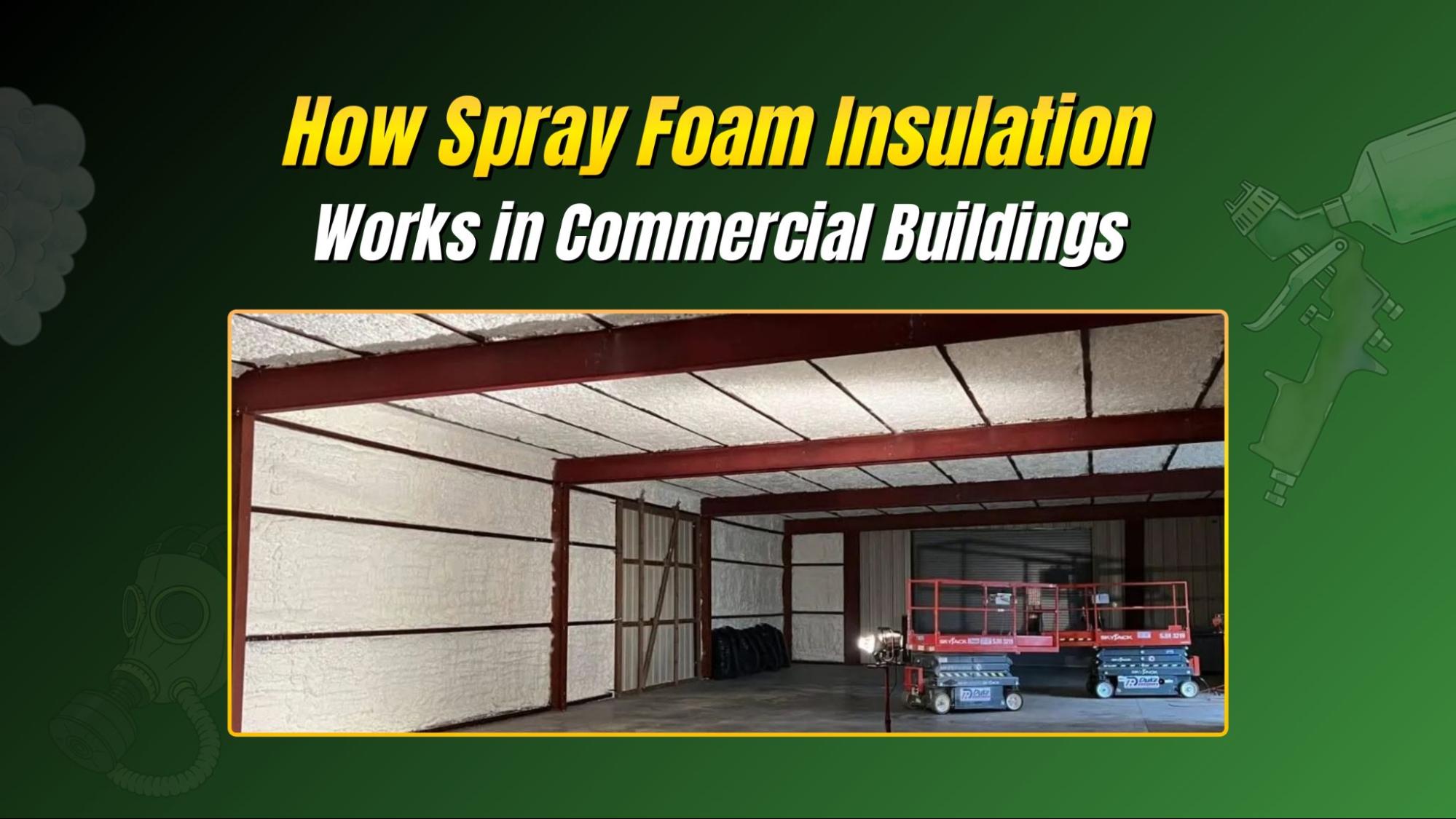
Metal Building Insulation
Metal buildings need good insulation. Spray foam insulation works well for these structures. It has a high R-value, which means it resists heat transfer effectively. This helps keep indoor temperatures stable.
High R-value spray foam reduces energy costs. Insulating our metal buildings this way saves money on heating and cooling bills. Proper insulation also prevents moisture buildup, reducing the risk of rust and corrosion in metal structures.
We can use both open-cell and closed-cell spray foam for metal building insulation. Closed-cell spray foam provides a higher R-value per inch compared to open-cell foam, making it more efficient overall. Regardless of the type we choose, using quality spray foam will lead to better comfort and energy savings.
Pole Barn Insulation
Pole barns are popular in Central Kansas. They can serve many purposes, from storage to workshops. Pole barn insulation significantly contributes to energy efficiency. It helps manage indoor temperatures year-round.
High R-value spray foam is ideal for this job; it has a high resistance to heat transfer. The higher the R-value, the better we keep out the cold and heat outside. For open-cell spray foam, we see an R-value of around 3.5 per inch; closed-cell foam offers even more.
Insulating our pole barns saves on energy costs and adds comfort inside. We can enjoy consistent temperatures no matter what the weather is doing outside! Spray foam also functions as a barrier against water and pests, which is a plus for protecting our investments.
Conclusion
Spray foam insulation is a smart choice for our homes and buildings. Higher R-values mean better protection against heat loss. This leads to lower energy bills and more comfort indoors. Choosing spray foam gives us peace of mind, knowing we are conserving energy while keeping our spaces cozy.
Let’s make the best choice for efficiency and comfort! Contact Advanced Seal Spray Foam for professional insulation services.