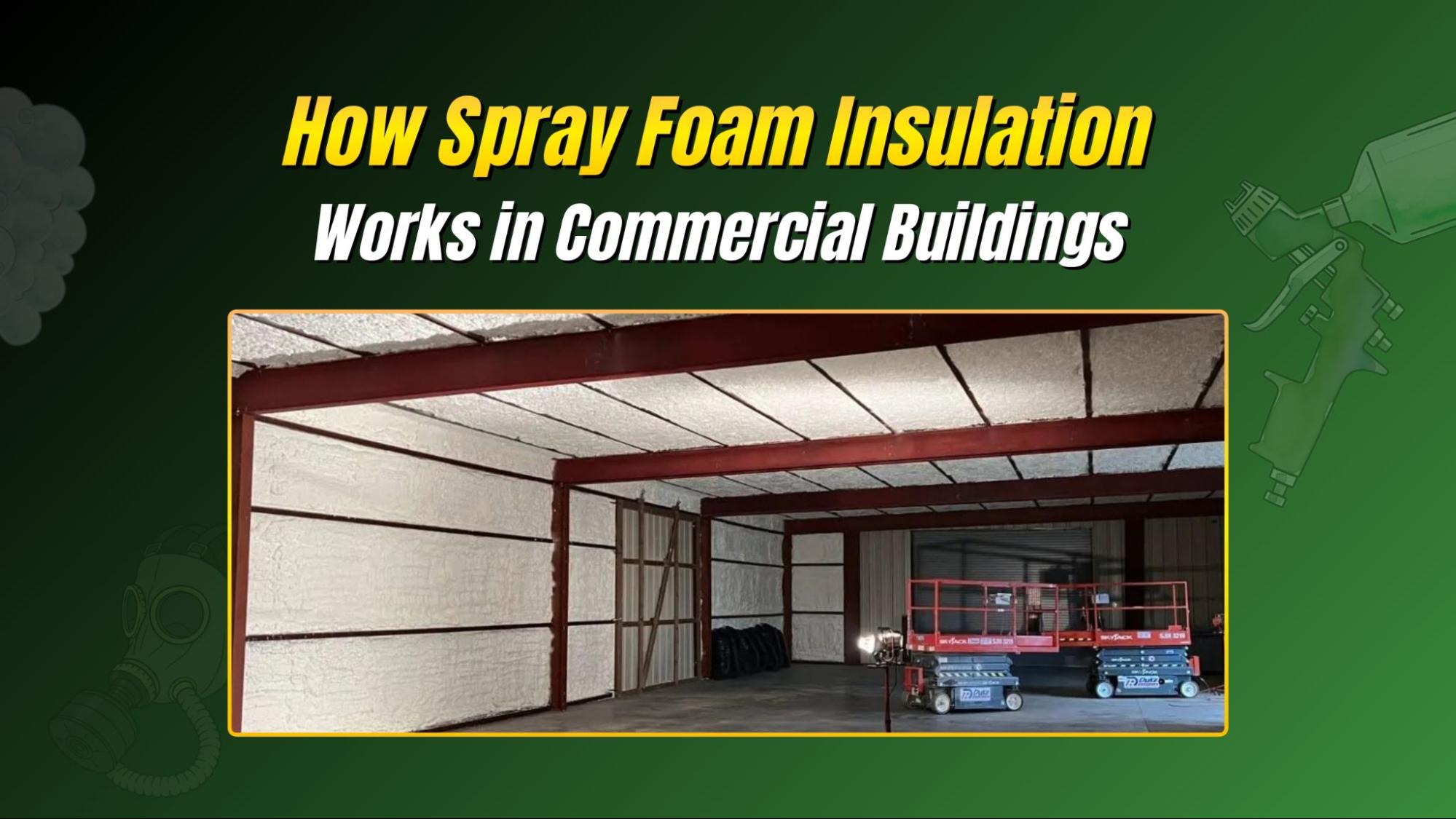
Metal buildings are popular in Kansas for their durability and versatility, serving purposes from agricultural storage to commercial workshops. However, without proper insulation, these structures can experience significant temperature fluctuations, moisture issues and energy inefficiencies. Spray foam insulation for metal buildings in Kansas is an ideal solution for these challenges, providing benefits that enhance the performance and longevity of your properties.
Benefits of Spray Foam Insulation for Metal Buildings
Thermal Regulation: Spray foam insulation creates a continuous barrier that minimizes heat transfer, maintaining consistent indoor temperatures regardless of external weather conditions.
Moisture Control: Metal buildings are prone to condensation, leading to rust, corrosion, and potential structural damage. Closed-cell spray foam acts as a moisture barrier, preventing water vapor from infiltrating and accumulating within the building’s envelope.
Enhanced Structural Integrity: When applied, closed-cell spray foam adds rigidity to metal panels, increasing the building’s overall strength. This reinforcement is particularly beneficial in areas susceptible to high winds and storms.
Energy Efficiency: By sealing gaps and cracks, spray foam insulation reduces air leakage, leading to lower heating and cooling costs. This energy efficiency not only saves money but also contributes to a more sustainable environment.
Pest Deterrence: The seamless application of spray foam eliminates entry points for pests, reducing infestations and protecting stored goods or equipment.
Choosing the Right Type of Spray Foam Insulation
There are two primary types of spray foam insulation: closed-cell and open-cell.
Closed-Cell Spray Foam: This denser option provides a higher R-value per inch, offering superior insulation and acting as both an air and moisture barrier. Its rigidity adds structural strength to metal buildings, making it ideal for exterior applications where durability is paramount.
Open-Cell Spray Foam: Lighter and more flexible, open-cell foam is suitable for interior applications where moisture resistance is less critical. It offers excellent soundproofing qualities but has a lower R-value compared to closed-cell foam.
Schedule Your Metal Building Insulation with Advanced Seal Kansas
The cost of spray foam insulation varies based on factors such as the building’s size, the type of foam used, and labor charges. While the initial investment may be higher than traditional insulation methods, the long-term savings in energy costs and maintenance often outweigh the upfront expenses. Additionally, the enhanced durability and moisture resistance provided by spray foam can extend the lifespan of the building, offering further financial benefits over time.