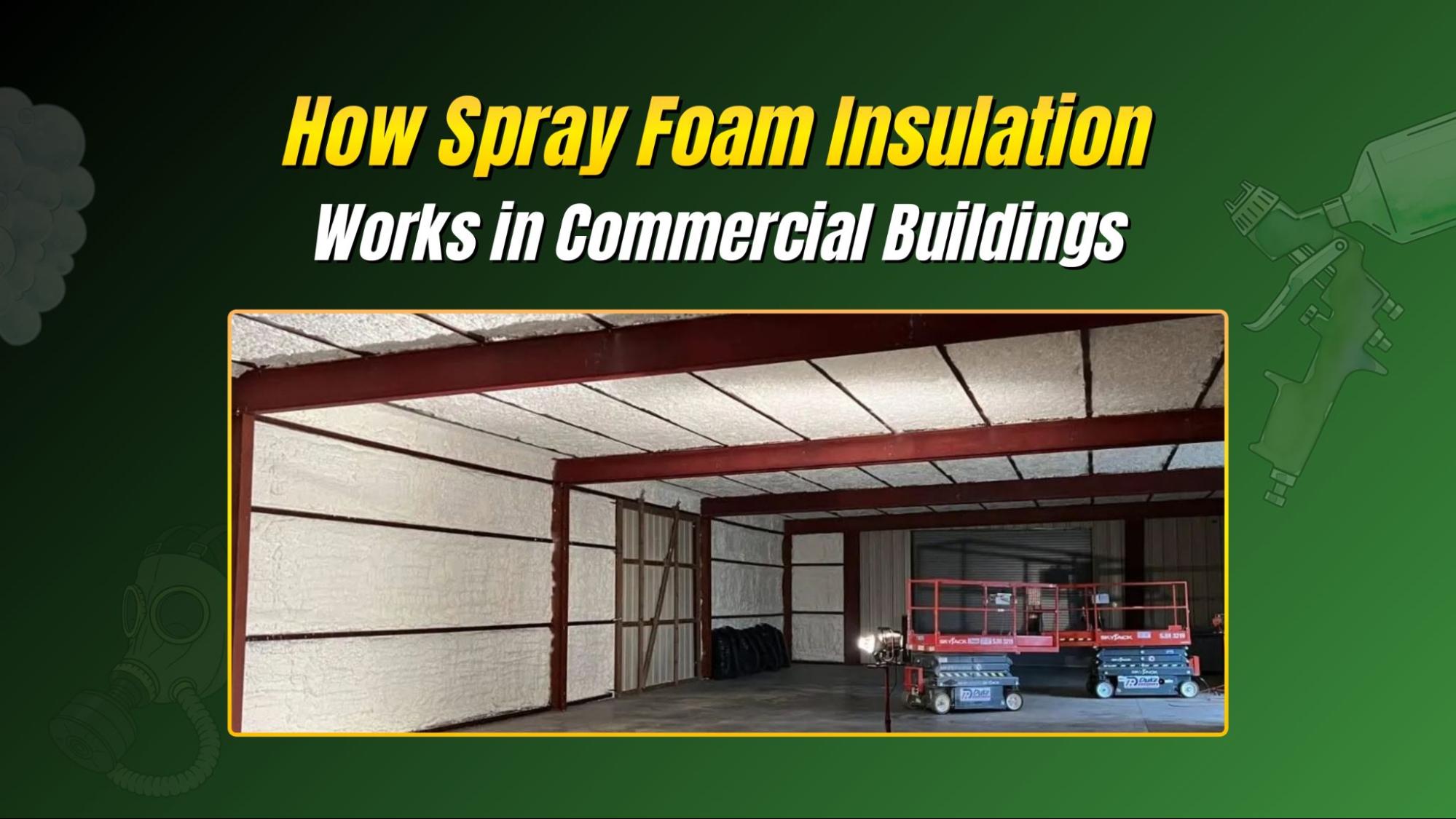
Energy efficiency and indoor comfort depend heavily on the quality and performance of your insulation.
In Central Kansas, where properties are exposed to extreme seasonal temperatures, choosing a long-lasting insulation solution is essential for reducing energy costs and maintaining consistent indoor temperatures. Spray foam insulation in Kansas has become a preferred option for homeowners and commercial property owners because of its exceptional durability, air-sealing performance, and long-term value.
When professionally installed, spray foam insulation can last 80 years or more without losing its effectiveness. However, its lifespan can vary based on installation quality, environmental conditions, and ongoing building maintenance.
In this blog, we’ll explore how long spray foam insulation lasts, what factors influence its longevity, and how to maximize the return on your investment.
Key Takeaways
- Spray foam insulation lasts 80 years or more when installed correctly, with open-cell foam lasting 20-30 years and closed-cell foam lasting 30-50+ years.
- Installation quality, environmental conditions, and regular maintenance directly determine how long spray foam insulation performs in Central Kansas properties.
- Proper air sealing and moisture management significantly reduce energy bills while improving indoor comfort and temperature consistency throughout your home or building.
- Closed-cell foam resists moisture and Kansas weather better than open-cell options, making it ideal for metal structures and extreme climate conditions.
What is Spray Foam Insulation?
Spray foam insulation is a liquid material that expands and hardens into solid foam once applied to your walls, attics, or crawl spaces. Two chemical components get mixed together, and they react to create millions of tiny air pockets that trap heat and cold air. This foam sticks to surfaces, fills gaps, and seals air leaks all at once.
Unlike traditional fiberglass batts or blown-in cellulose, spray foam does double duty: it insulates and air-seals at the same time. For homeowners and property managers across Central Kansas, this means fewer drafts, better temperature control, and lower energy bills. The foam comes in two distinct types, open-cell and closed-cell, each with different densities and performance characteristics.
Spray foam does what other insulation materials cannot: it seals, insulates, and adapts to your building’s unique geometry all in one application. Open-cell foam is lighter and more flexible. Closed-cell foam is denser and offers superior moisture resistance. Proper installation practices are critical to getting the performance and longevity you deserve.
Home insulation in Central Kansas faces real challenges from temperature fluctuations and moisture exposure, so we take those factors seriously on every project. We work with commercial building owners and residential customers alike, because the fundamentals stay the same: measure twice, apply once, and get it right from the start.
Types of Spray Foam Insulation
Open-Cell Spray Foam
Open-cell spray foam is one of the two primary insulation options we offer throughout Central Kansas. This type expands significantly after application, creating a soft, flexible material that feels almost like a sponge to the touch. The open structure allows air to move through the cells, making it excellent for sound damping in homes and commercial buildings.
Property managers and homeowners often choose open-cell spray foam to reduce noise from traffic, neighbors, or mechanical systems. Our jobsite experience shows that this material excels at air-sealing capabilities, helping to close gaps and cracks that traditional insulation misses entirely.
- Works well in interior walls, attics, and basement applications.
- Excellent for sound dampening in homes near busy roads or commercial activity.
- Adapts to minor building movements without cracking or separating from surfaces.
- Lower initial cost than closed-cell options, making it a budget-friendly starting point.
We’ve seen installations for decades when applied correctly by experienced spray foam insulation contractors in Kansas. Poor application can lead to settling or reduced effectiveness over time, so the quality of the work matters just as much as the product itself. According to 2026 regional insulation pricing data, open-cell spray foam averages between $1.20 and $1.75 per square foot for materials and installation in the Central Kansas market.
That range makes it a solid value choice for many projects for home insulation in Central Kansas. The material typically lasts 20 to 30 years with proper care and maintenance, though some well-installed applications perform beyond that timeframe. Its ability to air-seal while dampening sound makes it a smart pick for basements, attics, and interior walls.
Closed-Cell Spray Foam
Closed-cell spray foam insulation is a powerhouse option for Central Kansas properties. We apply this dense material with precision, and it delivers impressive results across a wide range of buildings and climates. The foam creates an air-tight seal that blocks drafts and moisture from sneaking into your walls. Its higher R-value outperforms open-cell alternatives, meaning your building stays warmer in winter and cooler in summer.
Data from the U.S. Department of Energy and building science research shows that closed-cell foam delivers an R-value of 6.0 to 7.0 per inch, compared to open-cell foam at just 3.5 to 3.9 per inch. It also increases a building’s resistance to wind uplift by up to 300%. For Central Kansas properties that face strong seasonal winds, that structural benefit is significant.
This type excels in environments with temperature swings and strong winds, which describes our Kansas climate perfectly. Metal structures benefit tremendously from closed-cell foam because it prevents condensation that would otherwise cause rust and decay. Proper installation is crucial for maximizing the longevity and effectiveness of closed-cell spray foam.
Installation quality makes all the difference with closed-cell foam, and we take that responsibility seriously. The application thickness, leak identification, and attention to installation details directly impact how long your insulation performs.
Factors That Affect the Longevity of Spray Foam Insulation
Several things shape how long your spray foam insulation actually lasts in your Central Kansas home or building. Understanding these factors helps you make smart decisions about your property.
Installation Quality
Proper installation practices form the foundation of spray foam insulation longevity. Our team at Advanced Seal identifies leak locations with precision before applying any foam. Selecting the appropriate foam type, whether open-cell or closed-cell, depends entirely on your specific building needs and climate conditions.
We pay close attention to adequate thickness during application because this directly impacts overall performance and durability. Thin applications fail faster, while properly applied foam maintains its R-value for decades. Our experience across Central Kansas shows that rushed installations often create problems down the road.
- Penetrations, rim joists, and roofline transitions are the most common trouble spots for air leakage.
- Every gap, corner, and edge needs complete coverage to prevent long-term performance loss.
- Foam applied at the correct temperature and humidity levels expands and adheres properly.
- Documenting each project gives homeowners a clear record and confidence in what was installed.
This pattern demonstrates how underspecified thickness, combined with poor jobsite environmental control, accelerates material degradation. Proper thickness, controlled humidity during application, and following manufacturer specifications prevent these failures entirely.
Quality installation separates spray foam that lasts from spray foam that disappoints. Central Kansas homeowners and property managers expect their insulation investment to perform for decades, not just a few years. The difference between mediocre and excellent spray foam insulation comes down to the hands doing the work and the standards guiding those hands.
Environmental Conditions
Central Kansas throws some serious challenges at spray foam insulation. Our region experiences strong winds, temperature swings from scorching summers to freezing winters, and moisture that sneaks into buildings without warning. These environmental factors directly impact how long your spray foam insulation in Central Kansas performs. Kansas weather tests insulation systems in ways that homeowners and property managers shouldn’t overlook.
Moisture management stands out as a critical concern, especially for metal buildings. Condensation forms when warm air meets cold surfaces, and that moisture can compromise your foam’s effectiveness over time. Closed-cell spray foam handles moisture better than open-cell varieties because it resists water absorption more effectively.
- Temperature fluctuations cause materials to expand and contract repeatedly, stressing insulation bonds over decades.
- Wind-driven rain penetrates gaps and cracks, accelerating deterioration if installation quality falls short.
- High humidity during application affects how the foam cures and adheres to surfaces.
- UV exposure degrades unprotected foam surfaces, making proper coverage and protection critical.
Open-cell foam allows moisture to pass through, which works well in certain applications but requires proper ventilation and drainage systems. Selecting the right foam type for your specific Kansas environment makes all the difference in longevity. Our team understands these local conditions well.
We’ve installed countless systems across Central Kansas, and we know which foam type performs best for each specific scenario. The correct choice between open-cell and closed-cell foam directly affects how many years your investment will protect your property.
Maintenance and Care
Proper maintenance extends the spray foam insulation’s lifespan significantly. Regular inspection catches problems before they become expensive repairs. You should schedule inspections at least annually, paying close attention to building transitions, penetrations, and rooflines where issues often start. Moisture intrusion, UV exposure, and physical damage can all shorten the life of your insulation if left unchecked.
Our inspection team consistently finds that careful attention to rim joists during both installation and annual inspections prevents the most common early defects in closed-cell applications. These small edge gaps, when caught early, take minutes to address but can save years of performance if ignored.
- Small cracks or gaps need prompt attention before water seeps behind the foam.
- Protect foam from direct sunlight whenever possible, especially during Kansas summers.
- Document any changes you notice between inspections so your contractor can assess trends over time.
- Soft spots, discoloration, or unusual odors are signs you should contact your installer right away.
Spray foam insulation that’s installed correctly resists deterioration far better than poorly applied material. Proper installation practices and ongoing care work together to protect your investment over the long term.
Average Lifespan of Spray Foam Insulation
Spray foam insulation performs exceptionally well across Central Kansas homes and commercial buildings, with most installations lasting decades when applied correctly.
Spray Foam Type | Average Lifespan | Key Details |
Open-Cell Spray Foam | 20-30 years | Softer material allows slight expansion and contraction. Performs well in stable indoor environments. Kansas temperature fluctuations require proper ventilation to maximize lifespan. Absorbs moisture if exposed to water. |
Closed-Cell Spray Foam | 30-50+ years | Denser composition resists moisture intrusion effectively. Provides superior structural support to buildings. Handles Central Kansas weather extremes better than open-cell options. Can last even longer with minimal maintenance. |
Factors That Extend Lifespan | Variable | Professional installation by experienced technicians matters greatly. Quality spray foam products hold up longer than budget alternatives. Proper sealing prevents air leaks and degradation. Regular inspections catch problems early. Controlling humidity levels protects foam integrity. Avoiding direct sunlight exposure slows deterioration. |
Factors That Shorten Lifespan | Variable | Water damage accelerates foam breakdown significantly. Poor installation creates voids and weak spots. Extreme temperature swings stress the material over time. UV exposure degrades foam surfaces rapidly. Inadequate ventilation traps moisture inside the walls. Pest intrusions compromise the foam structure. |
Commercial Building Considerations | 30-40+ years | Larger projects often see consistent performance across all sections. Industrial environments may require closed-cell foam exclusively. Regular maintenance schedules protect long-term investment value. Energy savings compound year after year. Property managers notice reduced HVAC strain over the decades. |
Open-cell foam works well for many Kansas homeowners, but closed-cell options provide superior protection against our region’s moisture and weather challenges. Installation quality plays the biggest role in determining actual lifespan.
Benefits of Long-Lasting Spray Foam Insulation
When you invest in spray foam insulation that lasts for decades, your home or building stays comfortable year-round without constant repairs. You’ll watch your energy bills drop while your property maintains its value for years to come.
Energy Efficiency
Spray foam insulation in Kansas delivers real energy efficiency benefits that matter to your wallet and your comfort. Effective air sealing creates a tight thermal envelope around your home or commercial building. That seal stops drafts cold. Air leakage accounts for significant energy waste in most Central Kansas properties, and spray foam tackles this problem directly.
According to the U.S. Environmental Protection Agency’s ENERGY STAR program, properly air-sealing a home and upgrading insulation can reduce total monthly heating and cooling costs by up to 20%. That’s a meaningful number for any homeowner or property manager watching their utility bills closely.
- Spray foam minimizes the work your HVAC system must perform, reducing wear and extending its life.
- Stabilized indoor temperatures mean fewer thermostat adjustments and less energy consumed overall.
- Air leakage control prevents conditioned air from escaping through walls, attics, and crawl spaces.
Both foam types reduce energy consumption, but closed-cell foam’s superior air-sealing and higher R-value translate directly into greater immediate savings on your utility bills.
Kansas’s temperature fluctuations, humidity levels, and seasonal weather patterns all challenge standard insulation. Spray foam manages air leakage and moisture at the same time, which improves comfort and energy performance in ways traditional insulation simply cannot match.
Improved Comfort
Our open-cell and closed-cell options work hard to improve temperature consistency throughout your home or commercial building. The difference is noticeable from the very first season.
- Drafts disappear almost immediately after installation.
- Floors stay warmer in winter without constant heating adjustments.
- Rooms maintain stable temperatures instead of swinging between hot and cold spots.
- Open-cell applications also reduce noise from traffic, neighbors, and mechanical systems.
The foam fills every crack and gap, leaving no room for unwanted air movement. Jason Rinehart and the Advanced Seal team have seen this transformation play out across countless Central Kansas properties, and the results are consistent: a quieter, more stable indoor environment.
Effective leak identification catches any gaps early, so your indoor climate stays stable from day one. That’s what quality spray foam insulation for walls in Kansas homes actually delivers over the long term.
Cost Savings Over Time
The financial benefits of spray foam insulation unfold gradually, as your heating and cooling bills shrink month after month.
Cost Savings Category | Impact on Your Expenses |
Energy Cost Reduction | Superior air-sealing capabilities from proper installation lower your heating and cooling expenses significantly. Effective control of air leakage prevents conditioned air from escaping through walls, attics, and crawl spaces. Your HVAC system runs less frequently, consuming less energy throughout the year. |
Moisture Management Benefits | Spray foam controls moisture infiltration, which reduces strain on your climate control systems. Excess humidity forces air conditioning units to work harder. By managing moisture levels, we help your equipment operate at peak efficiency, extending its operational lifespan and reducing repair costs. |
Temperature Consistency Gains | Improved comfort eliminates drafts and maintains consistent indoor temperatures. Rooms stay warmer in winter and cooler in summer without constant thermostat adjustments. Your family or tenants experience fewer temperature swings, so you adjust your system settings less frequently, cutting energy consumption. |
Kansas Climate Protection | Our region faces intense temperature fluctuations and strong winds that challenge standard insulation. Spray foam mitigates these effects by creating an airtight seal that resists Kansas’s demanding weather patterns. Your building maintains stable interior conditions, reducing the financial burden of seasonal heating and cooling demands. |
Long-Term Financial Planning | Most homeowners and property managers notice reduced utility bills within the first heating or cooling season. According to the 2026 industry market analysis, the typical return on investment for a full spray foam project falls between 3 and 7 years through utility bill reductions. Savings accumulate steadily from there, making spray foam a worthwhile investment that pays dividends through your building’s lifespan. |
Foam Type Performance Differences | The choice between open-cell and closed-cell foam affects overall performance and potential savings. Closed-cell foam provides superior air-sealing and moisture resistance, typically delivering greater energy savings. Open-cell foam offers excellent soundproofing and lower initial costs, appealing to budget-conscious property owners seeking moderate efficiency gains. |
Maximizing Installation Returns | Evaluating leak locations and appropriate foam thickness proves critical for achieving cost efficiency. Our team identifies problem areas where air escapes and applies the right foam type in optimal amounts. Proper application ensures you capture maximum savings rather than overspending on unnecessary material. |
Our Central Kansas clients report measurable utility bill reductions after spray foam installation takes hold. The payoff builds steadily as months pass, transforming your initial investment into genuine financial relief that compounds year after year.
Conclusion
Your Central Kansas property deserves insulation that works as hard as you do. Our team at Advanced Seal has watched countless homes and commercial buildings maintain their comfort and energy efficiency for 30 to 80 years, depending on the foam type and installation quality.
Proper installation around rim joists, rooflines, and penetrations makes all the difference in how well your insulation performs over time. Kansas weather throws real challenges at our buildings, but quality spray foam insulation for walls in Kansas, combined with regular maintenance, keeps your structure sealed tight against temperature swings and drafts.
Reach out to our Pratt or Wichita office today to learn how we can help your property stay comfortable and efficient for years to come.
FAQs
1. How long does spray foam insulation last?
2. Does spray foam insulation break down over time?
Open-cell foam can absorb moisture if it’s exposed to leaks, which weakens it over time. We always recommend closed-cell spray foam for basements, crawl spaces, and exterior walls here in Kansas because it creates a water-resistant barrier and won’t sag or settle as open-cell can.