
Spray foam insulation works through a chemical reaction. Two liquids meet at the spray gun, expand, and cure into a rigid foam full of tiny cells. Those cells slow heat transfer, and the unbroken layer blocks air leaks. Any insulation company in Kansas property owners hire should explain this process before work begins. In this blog, we will cover chemistry, foam types, building uses, metal structures, installation, safety, and retrofits. So, let’s begin reading now!
How Two Liquids Become an Insulating Foam
Spray polyurethane foam, or SPF, starts as two components. The A side contains isocyanates. The B side holds a polyol blend with catalysts, flame retardants, blowing agents, and surfactants, as EPA’s SPF chemistry overview describes.
The two sides meet at the gun and react vigorously. The reaction forms polyurethane and creates a cellular structure. Gas trapped inside those cells resists heat flow, which gives the foam its thermal resistance.
Thermal resistance is measured as the R-value. Energy.gov’s insulation guide explains that higher R-values mean greater resistance to heat flow. Foam also bonds to many clean, dry surfaces as it expands. Because it fills seams and gaps, a continuous application can reduce air leakage.
Results depend mainly on the applicator. EPA’s safety tips name improper mixing, proportioning, and thickness as technique problems that hurt quality. Thickness also drives R-value, since each inch of foam adds a set amount of resistance. Thin spots can create weak points in the envelope.
Open-Cell and Closed-Cell Foam Compared
The two foam types differ in blowing agent, density, and moisture behavior. Open-cell foam relies mainly on water as its blowing agent. Closed-cell foam uses chemical blowing agents and cures to a denser structure.
The Building America spray foam guide reports about R-6 per inch for typical closed-cell foam. It describes closed-cell foam as hydrophobic. Open-cell foam can absorb and hold liquid water.
Characteristic | Open-cell foam | Closed-cell foam |
Cellular structure | Predominantly open cells | Predominantly closed cells |
Density | Generally lower | Generally higher |
Thermal resistance per inch | Generally lower | Generally higher |
Water vapor behavior | Depends on product and thickness | Often offers greater vapor resistance |
Typical considerations | Assembly design and drying potential | Thickness, moisture control, and assembly compatibility |
These entries are general tendencies rather than product specifications. Data sheets and evaluation reports set the real numbers. Neither foam suits every commercial property. Assembly design, moisture conditions, required R-value, and code requirements drive the choice. An insulation company Kansas facilities rely on should supply data sheets for the exact product proposed.
Foam Performance Inside the Building Envelope
The envelope includes the roof, walls, floor, and openings. Heat moves through it by conduction. Air carries heat and moisture through gaps. Foam addresses both paths when applied continuously.
Insulation also changes how HVAC equipment runs. A tighter envelope can reduce loads, which may leave older equipment oversized. Oversized equipment can short-cycle and control humidity poorly. An insulation company building owners hire should review the envelope and mechanical systems together.
Actual results vary. Energy use depends on the building, HVAC system, climate, operating schedule, and installation quality. No insulation product guarantees lower utility bills. Kansas facilities face hot summers and hard freezes, so cooling and heating loads both deserve attention.
Spray Foam Across Commercial Building Types
Each building type loads the envelope differently. Use, occupancy, and equipment shape the insulation plan.
Warehouses and Distribution Facilities
These buildings combine large roof areas with metal wall assemblies. Storage requirements and occupancy patterns affect every insulation decision. Temperature-controlled storage demands a tighter envelope than an unconditioned dry-goods shed. Frequent dock door openings also limit what any envelope can achieve.
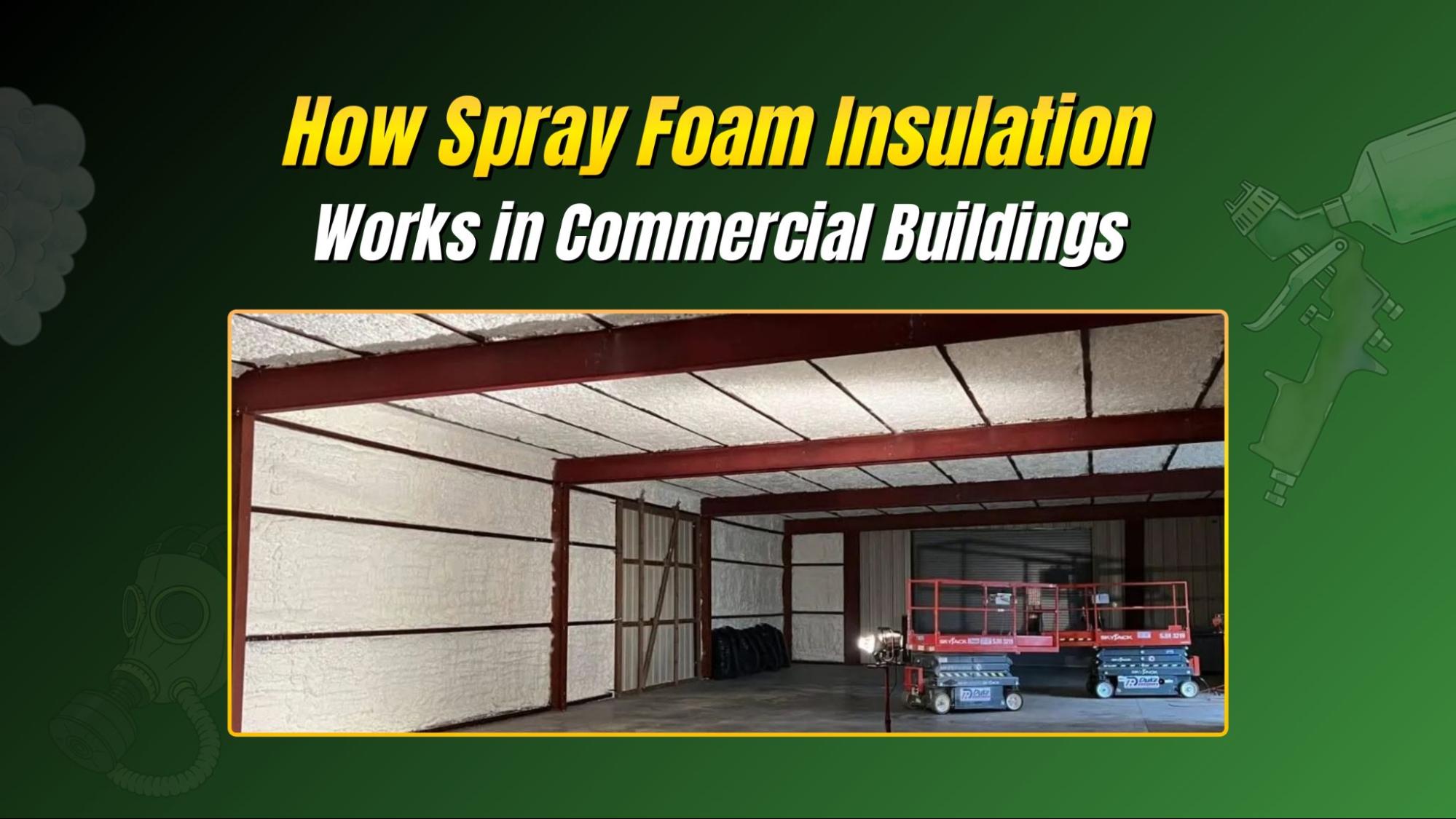
Commercial building insulation often involves large metal-framed warehouses like these. Roof area, wall construction, and door traffic should all enter the plan early.
Manufacturing and Industrial Buildings
Process heat, humidity, and dust all influence foam selection. The envelope still needs evaluation for moisture conditions. Foam doesn’t replace required industrial ventilation. Ventilation needs deserve review before any insulation decision.
Developers searching for “spray foam insulation companies near them” should look for experience with process conditions and ventilation reviews.
Offices and Retail Buildings
Continuity matters most here. Gaps at parapets, roof-to-wall joints, and penetrations create weak points. Indoor temperature control also depends on how the envelope and HVAC equipment interact. Mixed-use buildings may need different foam systems in office and shop zones. Property developers should ask an insulation company provider how each zone will be sealed and verified.
Spray Foam in Metal Buildings
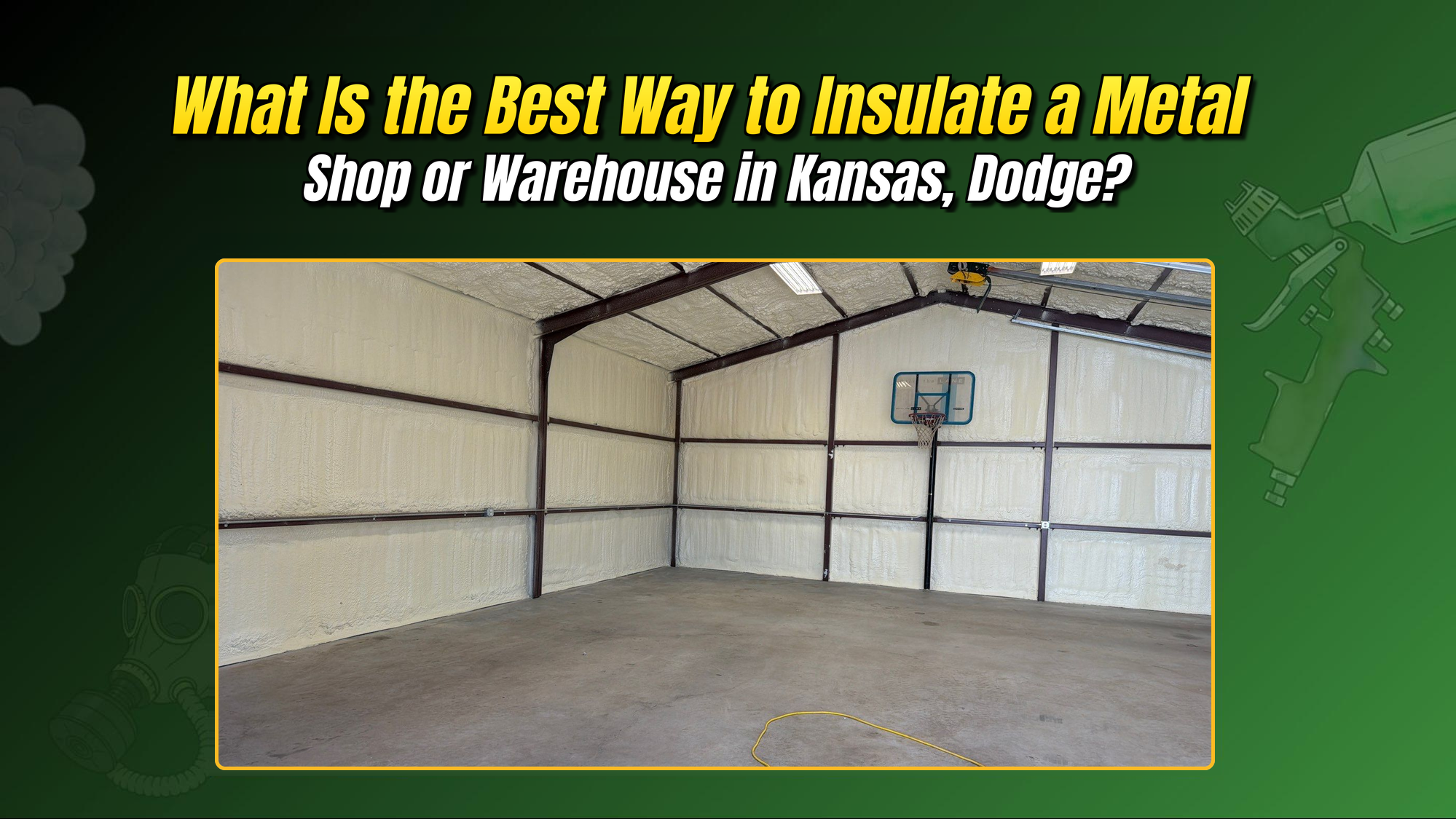
Metal panels cool and warm quickly. When humid indoor air touches a cold panel, water can condense on it. Foam applied tightly to the panel can limit that contact when the assembly is designed and installed correctly. It doesn’t prevent condensation in every assembly.
Assessment comes first. Corrosion, roof leaks, poor drainage, and weak ventilation all need attention before insulation. Foam sprayed over active leaks or wet, rusted panels hides problems instead of solving them.
Metal building insulation projects also differ from agricultural and industrial work. Livestock buildings, shops, and distribution centers carry different humidity, occupancy, and code conditions. These pre-insulation checks apply to most metal structures:
- Panel condition, including corrosion and coating damage
- Past or active roof and wall leaks
- Drainage paths at eaves, gutters, and slab edges
- Interior moisture sources such as washdown areas or unvented heaters
- Existing ventilation and exhaust systems
Installation Stages and Quality Checks
Procedures vary by product, substrate, building assembly, and site conditions. Manufacturer instructions and local codes govern each project. A typical sequence follows these stages:
- Assess the building and substrate, including moisture and existing materials.
- Prepare the area by cleaning, masking, and restricting access.
- Select a foam system suited to the assembly and building use.
- Apply foam in controlled passes at specified thicknesses.
- Allow curing and ventilation as the manufacturer requires.
- Inspect coverage, thickness, and adhesion.
- Complete protective barriers and other code-related work.
Qualified spray foam insulation contractors in Kansas verify substrate temperature and dryness before spraying, since both affect adhesion. Surface contamination, such as dust, oil, or loose coatings, can also weaken the bond.
Cost and scheduling depend on building size, foam type, thickness, access, and operating hours. Owners reviewing proposals from “spray foam insulation companies near me” will find scope and barrier details shape both. Occupied facilities often need work phased by zone.
Moisture, Fire Protection, and Worker Safety
Moisture and Drying
Closed-cell foam resists liquid water, while open-cell foam can absorb it. Either way, trapped moisture in a roof deck or wall can cause damage. Drying potential belongs in the assembly design. Foam should never go over wet substrates.
Fire Protection
Polyurethane foam is combustible, so it usually needs proper protection. Building codes often require an approved thermal barrier between the foam and occupied areas. Some applications may also require an ignition barrier. Welding sparks and cutting torches can ignite exposed foam. Requirements vary by location and depend on the product’s evaluation report. Always confirm local code requirements before leaving foam exposed in an occupied space.
Chemical Exposure and Ventilation
Isocyanates can irritate skin, eyes, and lungs, and EPA links them to asthma. OSHA’s isocyanates standards page lists rules covering general industry and construction. EPA advises that occupants and other trades stay out until manufacturer re-occupancy procedures are satisfied.
Facility managers should request those instructions from their insulation company in writing. Cure and re-entry times differ by product, so no universal number applies.
Retrofits and Insulation Removal
Existing buildings need an assessment before any foam goes on. The review identifies current insulation, substrate condition, moisture concerns, and preparation need, Commercial building insulation in Central Kansas retrofit work usually follows that sequence.
Not every old layer must come out. Dry, intact material that doesn’t block adhesion or trap moisture can sometimes stay. Removal makes sense when insulation is wet, contaminated, or damaged, or when it prevents bonding. Insulation removal contractors handle that stage before spraying begins.
Operating warehouses and plants add a scheduling layer. Spray foam insulation contractors can phase work by zone, keeping restricted areas separate from active operations.
Planning a Commercial Building Assessment
Spray foam limits heat transfer through its cellular structure and limits air leakage through a continuous seal. Product choice depends on building conditions, moisture, use, and requirements. Correct application and code compliance determine whether those properties show up in performance.
A building assessment is the practical next step. Arrange one with an insulation company in Kansas that documents its findings in writing.
If you want to get an actual insight into how spray foam works in commercial buildings, contact Advanced Seal Spray Foam Insulation. Visit our website to get a free estimate now!