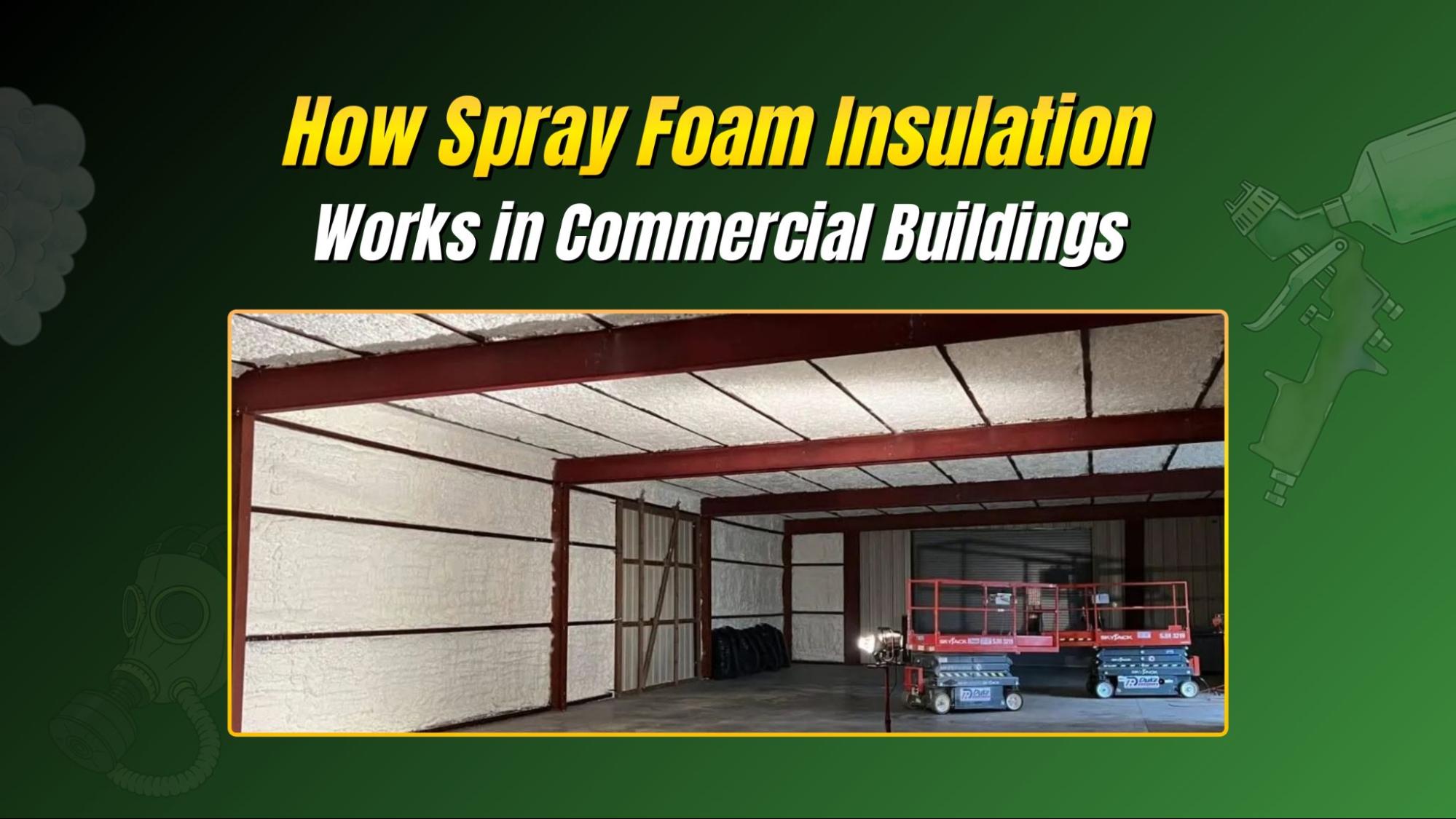
Figuring out how thick your spray foam insulation should be can feel like solving a puzzle with missing pieces. We’ve helped countless Central Kansas homeowners answer this exact question.
Here’s what we discovered: most people don’t realize how crucial getting the thickness right really is. This mistake can drain thousands from their wallets through sky-high energy bills.
This guide breaks down the exact thickness rules for walls, attics, and crawl spaces. We’ll also show you how to calculate board feet like a seasoned pro. You’ll finally stop second-guessing yourself and start putting real money back in your pocket.
How Thick Should Spray Foam Insulation Be?
Getting the right spray foam thickness can make or break your insulation project. We’ve seen countless jobs where homeowners either went too thin and lost efficiency, or went overboard and wasted money on unnecessary foam.
Ideal Thickness for Walls
For most Central Kansas homes, we recommend 2-3 inches of closed-cell spray foam thickness in standard wall cavities. This thickness delivers excellent thermal performance while fitting comfortably within typical 2×4 or 2×6 framing.
Closed-cell foam packs more insulating power per inch, so you get better bang for your buck with this approach. Open-cell spray foam requires 3-6 inches to match the same R-value performance as closed-cell options. We see this work well in deeper wall cavities or when builders specifically frame for thicker insulation.
The spray foam board feet calculator becomes your best friend here, helping you figure out exactly how much material you’ll need for your wall project. Most wall applications fall somewhere in the middle of these ranges, depending on your specific R-value requirements and local building codes.
Ideal Thickness for Roofs and Ceilings
Roofs and ceilings demand specific attic spray foam thickness to combat Central Kansas’s temperature swings. Closed-cell spray foam works best at 4-5 inches thick on these surfaces, delivering R-24 to R-35 insulation value.
Open-cell foam needs 6-10 inches to reach similar performance levels, since it provides only R-3.5 per inch compared to closed-cell’s R-6 to R-7 per inch. We’ve seen countless Kansas properties where thin applications failed during harsh winters, leaving homeowners with sky-high energy bills. The right thickness makes the difference between a comfortable home and an expensive heating nightmare.
Building codes in our region typically require R-30 to R-49 for ceiling applications, depending on your specific location. Going beyond 4-5 inches per application pass creates heat buildup during curing, which can damage the foam and reduce its effectiveness.
Our Advanced Seal team applies multiple passes if greater thickness is needed, allowing proper curing between each layer. This approach prevents the cracking and shrinkage we’ve witnessed on rushed jobs across central Kansas properties.
Thickness for Crawl Spaces and Basements
We recommend 2-3 inches of closed-cell spray foam for crawl spaces and basements in Central Kansas. This thickness provides effective air sealing and creates a vapor barrier that stops moisture problems before they start.
Closed-cell foam delivers R-6 to R-7 per inch, so 2-3 inches gives you R-12 to R-21 of insulation value. Local building codes set minimum R-values that affect how much foam you need, but proper air sealing provides benefits beyond just hitting those numbers.
Calculating how many board feet of spray foam is needed depends on your space size and target thickness. A board foot equals one square foot at one inch thick. For a 1,000 square foot crawl space at 2 inches thick, you need 2,000 board feet of foam.
We avoid going over 4-5 inches per application pass because excessive thickness causes heat buildup and curing problems that compromise the foam’s performance.
Open-Cell vs. Closed-Cell Spray Foam Thickness
The type of spray foam you choose dramatically changes how thick your insulation needs to be. We see homeowners get confused about this difference all the time, so let’s break down the thickness rules for each foam type.
Open-Cell Spray Foam Guidelines
Open-cell spray foam needs 3-6 inches of thickness to match the R-value of closed-cell foam. We’ve seen countless jobs where homeowners think thicker always means better, but that’s not the full picture.
For walls, 3.5 inches typically works well in Central Kansas homes. Roofs and ceilings require 6-10 inches to hit those higher R-values your building code demands. Application passes should stay at 4-5 inches maximum. The foam generates too much heat and doesn’t cure properly.
This creates weak spots and reduces the insulation’s performance. Open-cell foam also excels at soundproofing, making it perfect for media rooms or offices where noise control matters as much as energy savings.
Closed-Cell Spray Foam Guidelines
Closed-cell spray foam works like a thermal fortress for your building. We’ve installed thousands of square feet across Central Kansas, and the numbers don’t lie. This dense foam delivers R-6 to R-7 per inch, making it twice as effective as open-cell alternatives.
Wall cavities need 2-3 inches to hit proper insulation levels. Roofs and ceilings require 4-5 inches for optimal performance. Crawl spaces and basements typically get 2-3 inches for both air sealing and vapor barrier protection.
The thickness matters more than most property owners realize. We see too many jobs where contractors cut corners on depth, leaving buildings underperforming for decades. Closed-cell foam creates an impermeable barrier that stops air movement cold.
This air sealing benefit often outweighs pure R-value gains. Local building codes in our area set minimum requirements, but smart property managers aim higher. The upfront investment in proper thickness pays dividends through lower energy bills and improved comfort year after year.
Key Factors Affecting Spray Foam Thickness
Getting the right spray foam thickness isn’t just about slapping on a standard amount and calling it good. We need to consider your specific building’s needs, local climate demands, and the type of performance you’re after.
R-Value Requirements
Central Kansas building codes require specific R-values that directly impact how thick your spray foam needs to be. We’ve seen countless projects where property owners skip this crucial step, only to face code compliance issues later.
Your local building department sets minimum R-value requirements based on our climate zone, and these numbers aren’t suggestions. They’re mandatory minimums that determine whether your insulation passes inspection.
Closed-cell spray foam delivers R-6 to R-7 per inch, while open-cell foam provides around R-3.5 per inch. This difference means you’ll need roughly twice as much open-cell foam to hit the same R-value targets.
From our jobsite experience, most Central Kansas homes need R-13 to R-15 in walls and R-38 to R-49 in attics. Simple math shows that closed-cell foam reaches wall requirements with just 2-3 inches, but open-cell foam needs 3-6 inches for the same performance. Air sealing efficiency plays an equally important role in determining your foam thickness needs.
Air Sealing Efficiency
Air sealing efficiency matters more than most property owners realize. We’ve seen countless Central Kansas buildings where thick spray foam failed to perform because gaps and cracks weren’t properly sealed first.
Spray foam insulation effectiveness relies heavily on air sealing efficiency, not just R-value numbers. Your building envelope needs complete coverage to stop air movement. Small gaps around electrical outlets, pipes, and framing can reduce insulation performance by 30% or more.
Proper air sealing techniques create the foundation for maximum insulation potential. We apply spray foam in controlled layers to maintain air sealing integrity and avoid curing problems.
Each layer bonds with the previous one, creating an airtight barrier. This approach prevents the diminishing returns that happen with excessive thickness beyond necessary levels. Local building codes require minimum R-values, but those numbers mean little without proper air sealing practices backing them up.
Conclusion
Getting spray foam thickness right makes all the difference between a job well done and money down the drain. We’ve seen too many Central Kansas homeowners struggle with comfort issues because someone skipped the details or cut corners on proper thickness.
Your building deserves the right approach, whether that means 3.5 inches of open-cell foam in your walls or 2 inches of closed-cell in your crawl space.
At Advanced Seal Spray Foam Insulation, we take the guesswork out of these decisions by following manufacturer guidelines, local codes, and building science principles that actually work. Contact our team today, and let’s get your project done right the first time.
FAQs
1. How thick should spray foam insulation be in my attic?
2. What determines how much spray foam I actually need?
3. Can I apply spray foam too thick in one go?
4. How do I calculate the total amount of spray foam to buy?
Multiply your square footage by your desired thickness in inches, then divide by 12 to get cubic feet. Most spray foam kits tell you exactly how many cubic feet they cover, making your shopping trip a breeze.