

If your home has rooms that never feel “right,” you’re not alone. In many Central Kansas houses, especially those with older attics and vented crawl spaces, comfort problems usually come down to two things: air leaks and insulation that is old, damaged, or simply not doing its job anymore.
A lot of homeowners assume the fix is just “add more insulation.” Sometimes that helps. But when insulation is contaminated, moisture-affected, compressed, or full of gaps, adding more on top can lock in problems and leave you with the same hot/cold rooms. In these cases, insulation removal in Kansas is the smarter path to a truly comfortable, energy-efficient home.
That’s where insulation removal and replacement becomes the smarter path. Done correctly, it can make your home feel more even, less drafty, quieter, and easier to heat and cool, especially in places like Wichita, Hutchinson, Salina, Pratt, and throughout Central Kansas, where we get real seasonal swings and plenty of wind.
In this guide, we’ll break down when removal is worth it, what comfort improvements you can realistically expect, and what a professional replacement process should include.
Why “Bad” Insulation Makes a Home Uncomfortable
Insulation works like a thermal blanket, slowing heat movement through your attic, walls, and floors. But insulation can only do that if it’s:
- Dry
- Evenly distributed
- Not compressed
- Not bypassed by air leaks
- Not contaminated by dust, pests, or mold
Once insulation is compromised, comfort suffers in predictable ways:
1) Uneven room temperatures
You’ll feel it as:
- Hot bedrooms in summer (especially the second floor)
- Cold floors in winter (especially over crawl spaces)
- One room is always “behind” the thermostat setting
2) Drafts you can’t explain
Drafts often come from attic bypasses (wiring holes, top plates, can lights, bath fan penetrations). The U.S. Department of Energy points out that air leakage is a major contributor to comfort and energy problems, and that insulation alone doesn’t stop airflow.
3) Sticky humidity and stale air
When insulation is damp, or the attic/crawl space is out of balance, the home can feel clammy, even if the thermostat says the temperature is fine. Moisture problems also raise the odds of mold growth. EPA’s guidance is clear: mold doesn’t go away unless moisture is controlled.
4) More dust and allergy triggers
Old insulation can hold years of dust, debris, and contaminants. Disturbed insulation (especially after roof work, wildlife activity, or HVAC changes) can make indoor air feel worse.
When Insulation Removal Makes Sense
Insulation removal is not the default answer. But it is the right move when the existing insulation is working against you. Here are the most common “yes, remove it” situations:
Pest activity
If you’ve had birds, rodents, or squirrels in the attic, the insulation is often contaminated. Even after pest control, the insulation can keep odors and debris that affect indoor air quality and comfort.
Wet or mold-affected insulation
Insulation that’s been wet from roof leaks, bathroom fan discharge, or condensation can lose performance and create long-term odor and moisture issues. EPA’s mold guidance is a good reference point for why moisture problems need to be addressed at the source, not covered up.
Compressed, settled, or uneven blown-in insulation
Blown-in fiberglass and cellulose can settle over time. What started as an even blanket can become thin in critical areas, creating the “my bedroom is always hotter/colder” problem.
Old insulation with heavy dust and debris
Sometimes the insulation is technically “there,” but it’s so dirty and packed that it’s not performing well, and it’s contributing to poor indoor air quality.
Major remodels or HVAC upgrades.
If you’re changing ductwork, adding recessed lighting, remodeling bathrooms, or moving mechanical runs, it’s often a great time to clean up and rebuild the attic system correctly.
The Comfort Benefits You Can Expect After Removal and Replacement
When you work with professional insulation removal contractors in Kansas, you aren’t just swapping materials; you are upgrading your home’s thermal system. Homeowners typically notice:
1) More even temperatures across rooms
This is the big one. Proper replacement targets the common causes of hot/cold spots:
- Restoring full coverage where the insulation was thin
- Correcting voids at edges and eaves
- Sealing major attic air leaks before new insulation goes in
ENERGY STAR highlights how attic air sealing paired with insulation helps maintain more consistent indoor temperatures.
2) Less draftiness
Central Kansas wind finds every crack. When the attic floor is properly air-sealed and the insulation layer is continuous, the home simply feels calmer, with less “moving air” and fewer cold streaks. The Department of Energy also emphasizes that air sealing improves comfort and durability by reducing uncontrolled air leakage.
3) Better humidity control and fewer musty smells
A musty attic or crawl space often shows up inside the living space. Removing damp/contaminated insulation, fixing the moisture source, and rebuilding the insulation layer can noticeably reduce that “stale” feel.
4) Reduced HVAC short cycling and thermostat battles
If the attic is leaking air and insulation is uneven, your HVAC system can struggle to maintain the setpoint, leading to frequent cycling and temperature swings. Replacement (done right) helps your heating and cooling system operate more steadily, which is usually felt as smoother comfort, not just “lower bills.”
5) Quieter interior in many homes
Insulation isn’t soundproofing, but a better attic insulation layer can reduce some exterior noise and echo, especially in homes with large attic volumes.
What a “Done Right” Insulation Replacement Process Looks Like
If you want comfort improvements, not just a new layer of fluff, the process matters. Here’s what we typically recommend homeowners in Wichita and surrounding areas look for.
Step 1: Inspection + root-cause diagnosis
Before anything is removed, a professional should identify:
- Where the home is losing/gaining heat (attic bypasses, missing coverage, duct leakage)
- Moisture sources (roof leaks, bath fan termination, condensation)
- Ventilation issues in attic/crawl space
- Pest entry points that need to be sealed
This step prevents the “new insulation, same problems” outcome.
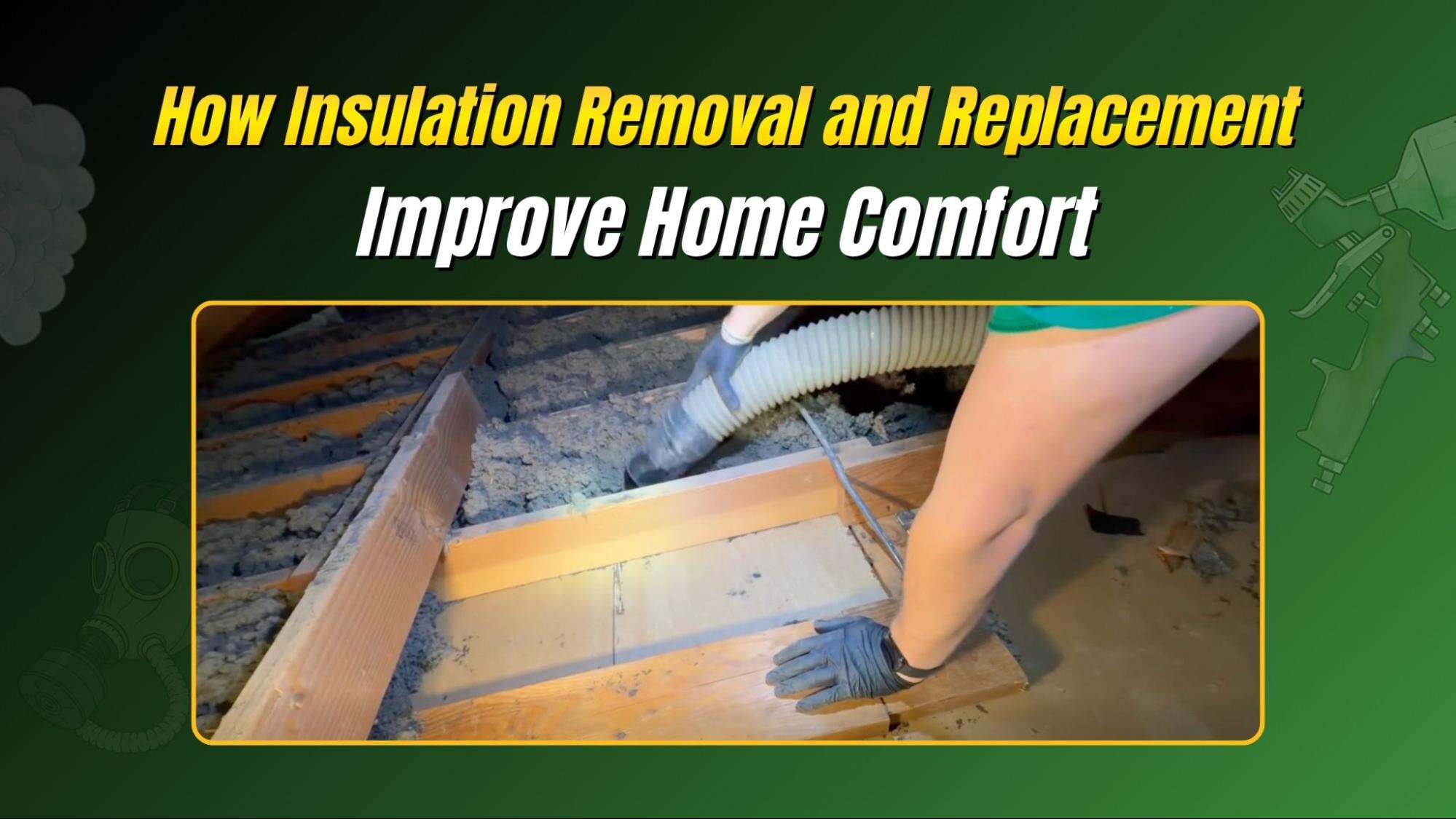
Step 2: Safe containment and removal
Insulation removal should control mess and exposure:
- Protecting living space from dust migration
- Proper disposal procedures
- Targeted cleanup where contamination is present
If mold is suspected, basic safety practices (ventilation and proper protective measures) matter; CDC guidance is a useful general reference for safe mold cleanup practices.
Step 3: Air sealing
This is where many jobs fall short. Air sealing closes the holes that let conditioned air escape and outside air enter:
- Top plates and wall-to-attic gaps
- Plumbing stacks and wiring penetrations
- Recessed lights and fan housings (where applicable)
- Attic hatches and pull-down stairs
DOE’s consumer guidance is straightforward: insulation slows heat flow, but air sealing stops the wind from moving through the building shell, which is crucial for comfort.
Step 4: Installing the right insulation for the space
The best material depends on the area and the goal:
- Attics: Blown-in fiberglass/cellulose, or spray foam in specific assemblies
- Crawl spaces: Solutions vary; moisture control and air sealing are key
- Rim joists: Often benefit from air-sealing-focused approaches
A good contractor will choose the material based on:
- Existing ventilation strategy
- Moisture risk
- Access and safety
- Long-term performance
Step 5: Ventilation and moisture control check
This step is often overlooked. A tighter home can be more comfortable, but you still need healthy ventilation and moisture management. The U.S. Consumer Product Safety Commission notes that weatherization should be paired with attention to indoor air quality and ventilation to avoid moisture and pollutant buildup.
Central Kansas Comfort Problems That Insulation Replacement Solves Well
Homes across Central Kansas often share a few common patterns:
Wind-driven drafts
Older attic hatches, poorly sealed top plates, and leaky penetrations show up as “my house feels breezy.”
Hot second floors in summer
Attic heat + poor air sealing + thin insulation at the edges = bedrooms that cook by late afternoon.
Cold floors over vented crawl spaces.
If your floors feel cold despite the thermostat, the crawl space strategy (and the insulation condition) needs attention.
Musty odors after rain or humidity shifts
This can be attic ventilation issues, bathroom exhaust problems, or crawl space moisture, not just “Kansas weather.”
If you’re dealing with drafty rooms, uneven temperatures, or insulation damaged by moisture or pests, it may be time for professional insulation removal and replacement in Wichita or Central Kansas.
Advanced Seal Spray Foam Insulation can evaluate what’s really going on, explain your options clearly, and recommend the best path, whether that’s selective insulation removal, full replacement, air sealing, or a combination.
Common Mistakes Homeowners Should Avoid
“Just blow more insulation on top.”
If the old layer is contaminated, damp, or uneven, burying it can prevent odors and performance problems.
Ignoring air sealing
New insulation without air sealing is like putting a thicker blanket on a bed with the window open. DOE and ENERGY STAR both stress that air sealing and insulation work best together.
Not fixing moisture sources first.
Roof leaks, bath fans venting into the attic, and crawl space humidity must be corrected, or the new insulation becomes the next victim.
Skipping proper ventilation considerations
A tighter home needs the right balance so you don’t trade drafts for stuffiness.
Comfort Comes From Fixing the System, Not Just Adding Material!
Insulation removal and replacement improve home comfort when it solves the real problem: a broken thermal and air barrier system. If your insulation is old, settled, wet, pest-damaged, or full of gaps, replacement can deliver:
- More even temperatures
- Fewer drafts
- Better humidity feels
- A calmer, more livable home year-round
And in a climate like Central Kansas: hot summers, cold snaps, and constant wind, that difference is hard to miss. If you want an expert opinion on whether your home needs insulation removal or a targeted upgrade, reach out to our professional insulation contractors at Advanced Seal Spray Foam Insulation for an evaluation and a straightforward plan to improve comfort without guesswork.


