
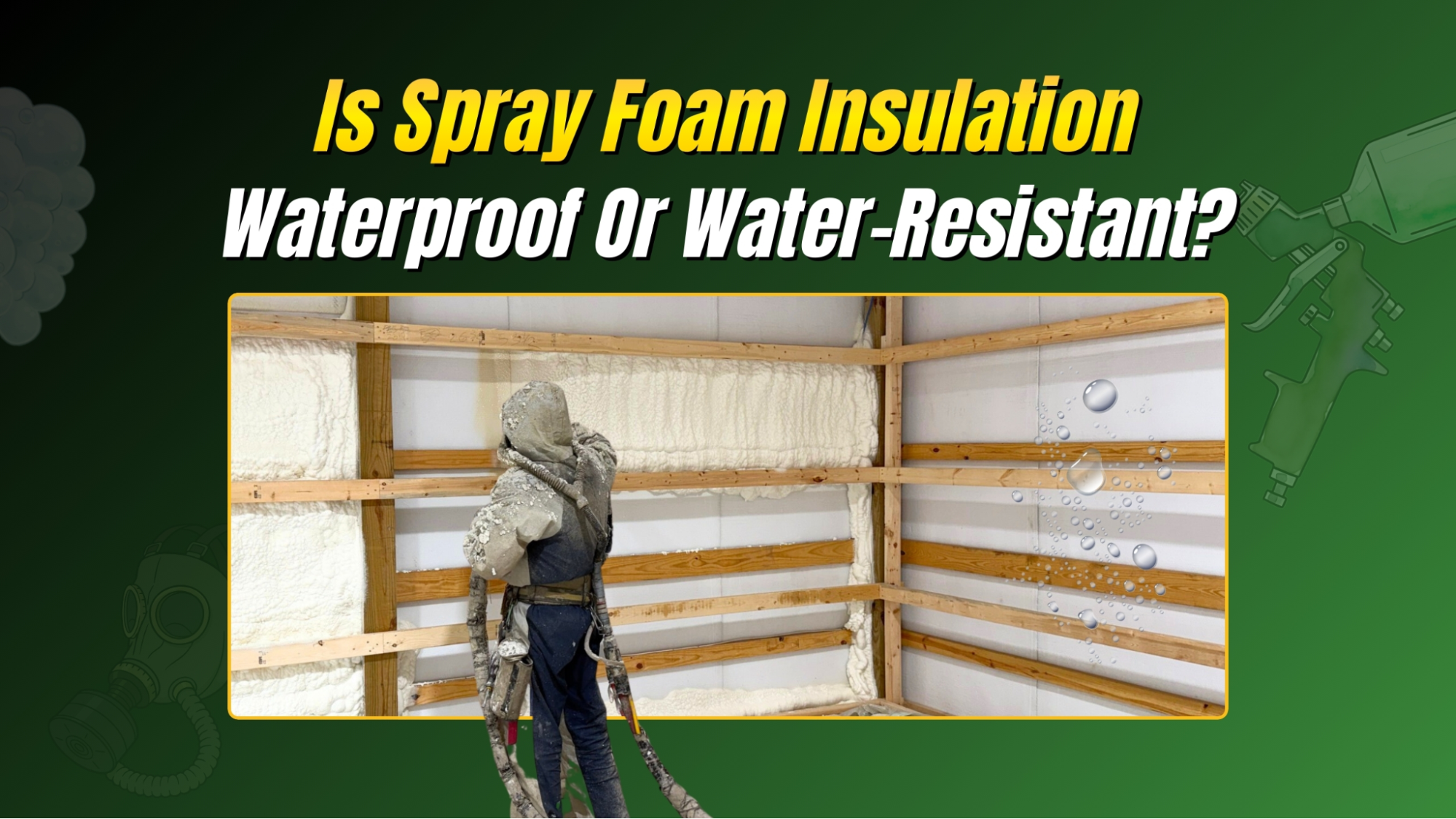

Water damage worries keep many Central Kansas property owners tossing and turning at night, especially when they’re picking insulation for basements, crawl spaces, or other damp areas.
We see this concern pop up on our jobsites all the time, and here’s something that might ease your mind: closed-cell spray foam can handle up to 72 hours of floodwater without losing what makes it work.
This guide breaks down whether spray foam insulation actually keeps water out or just slows it down, so you can pick what’s right for your moisture problems. You might be surprised by what you learn.
Understanding Waterproof vs. Water-Resistant Spray Foam Insulation
Key differences between waterproof and water-resistant
Understanding the difference between waterproof and water-resistant materials can save you thousands in water damage repairs. Waterproof means no water passes through the material, even during complete submersion or flooding. Water-resistant materials block water to some degree but allow moisture to seep through during extended exposure or heavy saturation.
We’ve seen countless property owners make costly mistakes by assuming their spray foam insulation offers complete waterproof protection. Closed-cell spray foam provides excellent water resistance and acts as a vapor barrier at 1.5 to 2 inches thick. Open-cell spray foam behaves like a sponge, soaking up moisture and offering minimal water protection. FEMA recognizes closed-cell spray foam as flood-damage resistant, rating it to withstand up to 72 hours of floodwater exposure without structural failure.
The cell structure determines everything regarding moisture control. Closed cells create tiny barriers that resist water penetration, while open cells create pathways for moisture absorption, explains Jason from our Advanced Seal team after installing foam in hundreds of Central Kansas properties.
Your choice between these foam types directly impacts your building’s long-term moisture control performance. Spray foam insulation for moisture control works best with closed-cell applications in basements, crawl spaces, and exterior walls. We install the right foam type based on your specific moisture challenges, not just the lowest bid option.
Why it matters for insulation performance
These distinctions directly impact how well your insulation protects your property over time. We’ve seen countless Central Kansas homes where water-resistant materials failed after prolonged exposure to moisture, leading to reduced thermal efficiency and costly repairs. Closed-cell spray foam provides a tight, impermeable seal that enhances moisture and energy efficiency, making it the superior choice for long-term performance.
Water resistance prevents the devastating cycle of moisture damage that destroys insulation value. Open cell spray foam may lose some insulating properties if exposed to water for extended periods, while closed cell foam retains its insulating properties after wetting and drying cycles, maintaining performance post-flood. This difference becomes critical during Kansas storms or plumbing emergencies where water exposure is inevitable.
The financial impact speaks volumes about why this matters. Inadequate water resistance in insulation can lead to water damage, structural damage, and reduced thermal efficiency. We’ve witnessed commercial building owners face thousands in replacement costs because they chose the wrong foam type for moisture-prone areas.
Closed-cell foam’s high R-value of R6-7 per inch contributes to its superior insulation, even after moisture exposure, protecting your investment for decades rather than years.
Closed-Cell vs. Open-Cell Spray Foam Insulation
Water resistance of closed-cell spray foam
Closed-cell spray foam creates a dense, compact barrier that repels water like a duck’s back. We’ve seen this material withstand serious moisture challenges in Central Kansas basements and crawl spaces. At 1.5 to 2 inches thick, closed-cell foam serves as both a vapor barrier and an air barrier. This dual protection stops moisture from sneaking through your building envelope.
FEMA recognizes closed-cell spray foam as flood-damage resistant. The material can handle up to 72 hours of floodwater exposure without significant damage. After flooding, you can power-wash the foam and reuse it if the structure remains sound. The R-value hits about R6 to 7 per inch, beating open-cell foam, fiberglass, and cellulose.
Closed-cell foam doesn’t absorb water, so if moisture hits it, water simply flows around the surface. The foam dries out completely and regains full performance. Closed-cell spray foam acts like a raincoat for your building, keeping moisture out while maintaining its insulating power year after year. Open-cell foam presents different challenges in moisture-prone areas.
Limitations of open-cell spray foam in moisture-prone areas
Open-cell spray foam acts like a sponge in wet conditions. We’ve seen this foam type soak up water and hold onto it for weeks after a leak. This creates serious problems for homeowners in Central Kansas basements and crawl spaces. The soft, porous structure allows water vapor to pass right through, which means your insulation loses its effectiveness fast.
During our installations, we avoid recommending open-cell foam for any area where moisture might be an issue. Prolonged wetness in open-cell spray foam creates perfect conditions for mold and mildew growth. The lower-density material simply can’t handle water exposure like its closed-cell cousin.
We’ve witnessed severe water intrusion events where open-cell foam breaks apart completely, allowing water to flow through walls and floors. This type of failure can cost thousands in repairs and remediation. The foam’s lower R-value per inch also means you get less insulating power, especially after water damage occurs.
Areas like basements, crawl spaces, and other moisture-prone environments spell trouble for open-cell spray foam insulation. We steer our clients away from this material in these locations because the risks outweigh any cost savings.
The structural weakness of open-cell foam means it won’t provide the air sealing and moisture control that Kansas properties need. Smart property managers choose materials that can handle our region’s humidity and occasional flooding without falling apart.
Factors Affecting Spray Foam Insulation’s Water Resistance
Several key factors determine how well spray foam insulation resists water intrusion in your home or building. We’ve seen how installation quality, material selection, and environmental conditions can make or break your insulation’s long-term performance against moisture.
Installation quality and material type
Installation quality makes or breaks your spray foam’s water resistance. Poor sealing creates gaps and cracks that let water sneak through, turning your insulation into a soggy mess. We’ve seen countless jobs where a sloppy application led to water damage that could have been prevented.
Closed-cell spray foam needs 1.5 to 2 inches of thickness to work as a proper vapor and air barrier. Anything less won’t give you the protection you’re paying for. Material type determines how well your foam handles moisture from day one. Closed-cell foam naturally resists water better than open-cell varieties.
Professional installation becomes critical here, especially for commercial buildings and roofing applications where water pressure can be intense. Improper application of closed-cell foam can actually trap moisture against wood framing, causing rot and structural damage that costs far more than doing the job right the first time.
Impact of prolonged water exposure
Quality installation and material choice set the foundation, but time tells the real story about spray foam’s water resistance. We’ve seen countless properties in Central Kansas where prolonged water exposure reveals the true limits of different foam types.
Closed-cell spray foam can withstand up to 72 hours of floodwater exposure without significant degradation. Open-cell foam tells a different tale entirely. Prolonged exposure to water can cause open-cell spray foam to lose its insulating properties, leaving property owners with expensive repairs.
Waterlogged spray foam, if not dried properly, can promote mold growth, especially in open-cell applications. Continuous water exposure may compromise the foam’s bond to building materials, reducing insulation effectiveness across your entire structure. Even the best foam installations may fail under extreme long-term water submersion or high hydraulic pressure conditions that Central Kansas storms sometimes deliver.
Application Areas for Spray Foam Insulation
We install spray foam insulation in many different areas across Central Kansas properties, from residential attics to large commercial buildings. Each location brings its own moisture challenges, which makes choosing the right type of spray foam critical for long-term performance.
Attic Insulation
Attics in Central Kansas face extreme temperature swings that put serious stress on your home’s energy efficiency. We’ve seen countless attics where poor insulation leads to ice dams in winter and scorching heat in summer. Closed-cell spray foam insulation’s waterproof properties make it our top choice for Kansas attics. At 1.5 to 2 inches in thickness, this material creates both a vapor barrier and an air barrier.
The R6 to R7 per inch rating delivers exceptional energy performance that open cell foam simply can’t match. Our crews regularly install closed-cell foam in attics because it prevents condensation buildup that destroys traditional insulation. Temperature consistency improves dramatically once we seal those air leaks.
Drafts disappear, and indoor humidity levels stay controlled year-round. Open-cell spray foam absorbs water and loses effectiveness in moisture-prone areas, making it a poor choice for most attic applications. The weather variability here demands materials that won’t fail during Kansas storms or humidity spikes. Spray foam insulation prevents water damage by creating a continuous barrier that stops air infiltration and moisture intrusion.
Home insulation materials like fiberglass or cellulose can’t compete with spray foam’s dual protection. Our experience shows that properly installed closed-cell foam maintains its performance for decades, even through severe weather events. Commercial building owners particularly appreciate how spray foam addresses multiple issues in one application.
Crawl Space Insulation
Moving from attic spaces to ground level, crawl spaces present their own moisture challenges. Central Kansas homes face unpredictable weather patterns that make crawl space protection critical. We recommend closed-cell spray foam for these areas because it acts as a barrier against moisture and vapor. This foam type prevents water entry and inhibits mold and mildew growth, even in high-humidity conditions.
Properly installed closed-cell spray foam prevents water intrusion in crawl spaces where flooding risks run high. Open-cell foam absorbs moisture in these environments, supporting microbial growth that damages your home’s foundation.
Closed-cell foam maintains a dry crawl space, reducing wood rot and structural decay risks. This protection contributes to home comfort and energy efficiency, making it essential for Central Kansas properties facing frequent weather changes.
Commercial Insulation
Commercial buildings face unique water exposure challenges that residential properties rarely encounter. We’ve seen firsthand how closed-cell spray foam insulation performs in warehouses, manufacturing facilities, and office complexes across Central Kansas. These structures often deal with higher moisture loads from equipment, larger roof areas, and more complex HVAC systems.
Closed-cell foam’s dense structure provides superior performance in commercial applications subject to water exposure, making it our go-to choice for most commercial projects. Commercial spray foam roofing systems should always be installed by experienced professionals who understand local building codes and climate considerations.
Our 40 years of experience have taught us that commercial insulation often requires compliance with specific regulations that don’t apply to residential work. The investment pays off through energy savings and long-term durability. Closed-cell spray foam’s flood-damage resistance makes it suitable for commercial properties at risk of flooding, which is particularly important for Central Kansas businesses located in areas prone to severe weather.
Metal Building Insulation
Metal buildings across Kansas face serious condensation challenges, and we’ve seen countless structures suffer from moisture problems. Closed-cell spray foam acts as both insulation and a moisture barrier in these applications. This dual function makes it particularly effective for controlling the temperature swings that create condensation issues. We regularly install closed-cell foam in warehouses, shops, and agricultural buildings throughout central Kansas.
Open-cell foam simply doesn’t work in metal building applications. The material absorbs water and provides poor structural support for metal panels. Closed-cell foam offers structural strength while preventing water ingress completely. We’ve watched metal buildings maintain dry interiors even during Kansas storms because the foam creates an airtight seal.
The energy cost savings become apparent immediately, as temperature consistency improves dramatically. Proper application thickness matters greatly in metal building projects. We apply closed-cell foam directly to metal panels, creating a continuous barrier that stops thermal bridging.
This approach prevents the hot and cold spots that plague poorly insulated metal structures. Our experience shows that correct foam type selection and professional installation make the difference between a comfortable, dry building and one plagued with moisture issues.
Pole Barn Insulation
Pole barns share many moisture challenges with metal buildings, yet they face distinct structural demands that make insulation choices critical. We see countless post-frame buildings across Central Kansas where moisture infiltration has caused significant damage over time. Closed-cell spray foam stands as the preferred choice for pole barn insulation due to its high water resistance and structural benefits.
Properly installed closed-cell foam in pole barns prevents water intrusion from wind-driven rain or ground moisture that commonly affects these agricultural structures. The foam’s dense structure reinforces the barn’s integrity against moisture and weather extremes that Central Kansas throws at these buildings year after year.
We achieve R6-7 per inch with closed-cell application, delivering energy efficiency that keeps operating costs manageable. Spray foam insulation in pole barns addresses air leaks and improves long-term durability while maintaining stable interior temperatures.
Open-cell foam falls short for pole barn applications exposed to moisture conditions. Advanced Seal Spray Foam Insulation provides pole barn and post-frame building insulation services across Kansas, focusing on closed-cell solutions that protect your investment.
Conclusion
We’ve helped Central Kansas property owners understand spray foam insulation’s water resistance for years. Closed-cell spray foam stands up to moisture like a champ, while open-cell foam needs dry conditions to perform well.
Your building’s specific needs determine which type works best for your situation.
Smart property owners choose the right foam type for each application. Basements and crawl spaces benefit from closed-cell’s moisture barrier properties, while attics often work fine with open-cell options.
Getting professional installation from Advanced Seal Spray Foam makes all the difference in long-term performance and water resistance.


